When a child or young person experiences trauma, the effects can be deeply distressing and long-lasting. But with the right support, recovery is possible. Whether the trauma stems from a single event or ongoing experiences such as abuse or neglect, a range of evidence-based treatments can help young people heal – emotionally, psychologically, and physically.
PTSD and Complex PTSD (C-PTSD) in children and teenagers can affect every part of their lives, from relationships and learning to behaviour and self-esteem. But early support can make a life-changing difference.
The importance of early, compassionate care
A child or young person’s recovery from PTSD or C-PTSD depends on a number of factors – including their age, resilience, access to support, and the nature and severity of the trauma they’ve experienced. Research shows that children tend to respond best when:
-
They feel safe, understood, and supported
-
Their care environment is stable and predictable
-
Their parents or carers are involved in the therapeutic process
-
There’s space for them to express emotions at their own pace, without judgement
It’s also important to remember that children may not always show their trauma in obvious ways. Instead of talking about what happened, they may act out, withdraw, have sleep problems, regress in behaviour, or complain of physical symptoms like stomach aches or headaches.
Evidence-Based Treatments
🧠 EMDR (Eye Movement Desensitisation and Reprocessing)
EMDR is a highly effective trauma therapy recommended by both the World Health Organization (2013) and the International Society for Traumatic Stress Studies (ISTSS, 2018) for use with children and adolescents.
Using gentle, age-appropriate techniques such as drawing, storytelling, or play alongside bilateral stimulation (such as eye movements or tapping), EMDR helps a young person’s brain reprocess traumatic memories safely. This reduces the emotional intensity of the memories and allows healing to begin.
EMDR is available in many NHS CAMHS teams across the UK. There are also private therapists trained specifically in EMDR for children. It’s important to work with a practitioner accredited by the EMDR UK Association, who has also completed specialist training in working with children and young people.
Find out more about EMDR for children and read AJ’s EMDR story here.
🗣️ Talking Therapies (including Trauma-Focused CBT)
Trauma-focused Cognitive Behavioural Therapy (CBT) – adapted for children and teens – is one of the most well-researched and recommended treatments for PTSD and C-PTSD. It’s also supported by NICE guidelines in the UK.
Talk therapy gives young people tools to understand and manage their symptoms. Sessions are often designed to help them:
-
Identify and name difficult emotions (especially fear and anxiety)
-
Use calming techniques like breathing or visualisation
-
Talk about or act out what happened in a safe, controlled setting
-
Challenge distorted thoughts like guilt or self-blame
-
Rebuild trust in others and develop a sense of safety and hope
For younger children, sessions may include storytelling, drawings, or play to help express feelings they can’t put into words.
🎨 Play Therapy
Play therapy is especially helpful for children aged 2 to 11, but can be beneficial for older children too. It offers a safe, nurturing space where children can express what they’re feeling through play, rather than words.
Play therapy can include:
-
Art and drawing
-
Role-play or storytelling
-
Creative visualisation
-
Music and dance
-
Sensory-based activities
Through play, children process their trauma at their own pace, rebuild self-confidence, learn emotional regulation skills, and experience a sense of control and safety.
Learn more about play therapy for PTSD here.
💊 Medication
Medication is not a first-line treatment for PTSD in children and young people. However, in some cases – particularly when symptoms of depression, panic attacks, or severe anxiety are also present – doctors may prescribe certain medications such as SSRIs (e.g., citalopram) alongside psychotherapy.
Medication alone is not recommended as a standalone treatment for PTSD or C-PTSD. It may, however, help manage specific symptoms while therapy does the deeper healing work.
👨👩👧 Family Therapy and Parent Involvement
Children heal best when their caregivers are part of the process. Including parents or carers in therapy can:
-
Help reinforce healthy coping strategies at home
-
Improve emotional communication within the family
-
Equip caregivers to support the child’s needs and manage their own emotions
-
Build a shared sense of resilience, understanding, and healing
In some cases, family therapy may also be offered to address the broader impact of trauma within the household. Even if only one member of the family has been directly affected, the ripple effects can be far-reaching – and support for the whole family can lead to the best outcomes.
How You Can Help Your Child
You don’t have to be a therapist to support your child. Your love, presence, and consistency are some of the most powerful tools for healing. Here are a few ways to help:
-
Let your child know their feelings are valid – it’s okay to be scared, sad, angry, or confused.
-
Stay calm and consistent, even when they push boundaries. This helps them feel safe.
-
Keep routines going – familiar daily rhythms provide a sense of control and security.
-
Try gentle distractions to shift their focus when they’re overwhelmed:
-
Drawing or painting
-
Listening to music
-
Cooking or baking together
-
Playing games or being outside
-
Mindfulness or movement activities
-
-
Remind them that they are not alone, and that they are incredibly brave.
A Note on Recovery
Some children may begin to feel better within a few months of starting treatment. For others, especially if the trauma was ongoing or severe, the journey may take longer. There’s no timeline for healing – but every step forward matters.
With the right therapy, loving support, and understanding, children and young people can recover from PTSD and C-PTSD – and go on to live healthy, hopeful, and fulfilling lives.
If you’re concerned about a child or young person, speak to your GP, school counsellor, or local CAMHS team. You can also explore more information and resources right here on the PTSD UK website.
Social MEDIA SHARE THIS PAGE
- Traumatic stress in children: for parents and carers
- Post Traumatic Stress Disorder (PTSD) Symptoms & Causes
- Kaminer, D., Seedat, S., & Stein, D. J. (2005). Post-traumatic stress disorder in children. World psychiatry : official journal of the World Psychiatric Association (WPA), 4(2), 121–125.
- Post-Traumatic Stress Disorder (PTSD) in Children
- Post-Traumatic Stress Disorder
Join us in supporting the journey toward healing and recovery for everyone with PTSD & C-PTSD
Help us provide vital support, information, and resources across the UK
Printed Support Items
Our Supporters store offers a variety of merchandise to help raise awareness, along with practical items to support your treatment and recovery like our Ink and Insight Toolkit, Emotional Wheel Postcards, PTSD & C-PTSD Symptom Tracker sheets, Safety Plan worksheets and Communication Cards.

Insights: The PTSD UK Blog
Your Source for the Latest Support and Advice

AAA STANDARD BLOG POST
Lorem ipsum dolor sit amet, consectetur adipiscing elit. Donec tortor tortor, facilisis eu imperdiet sit amet, semper eget urna. Quisque sit amet erat risus. Pellentesque habitant morbi tristique senectus et netus et malesuada fames ac turpis egestas.
Read article
Why does Post Traumatic Stress Disorder make you so tired?
Lorem ipsum dolor sit amet, consectetur adipiscing elit. Donec tortor tortor, facilisis eu imperdiet sit amet, semper eget urna. Quisque sit amet erat risus. Pellentesque habitant morbi tristique senectus et netus et malesuada fames ac turpis egestas.
Read article
Hello world!
Lorem ipsum dolor sit amet, consectetur adipiscing elit. Donec tortor tortor, facilisis eu imperdiet sit amet, semper eget urna. Quisque sit amet erat risus. Pellentesque habitant morbi tristique senectus et netus et malesuada fames ac turpis egestas.
Read article
Hello world!
Lorem ipsum dolor sit amet, consectetur adipiscing elit. Donec tortor tortor, facilisis eu imperdiet sit amet, semper eget urna. Quisque sit amet erat risus. Pellentesque habitant morbi tristique senectus et netus et malesuada fames ac turpis egestas.
Read article
Hello world!
Lorem ipsum dolor sit amet, consectetur adipiscing elit. Donec tortor tortor, facilisis eu imperdiet sit amet, semper eget urna. Quisque sit amet erat risus. Pellentesque habitant morbi tristique senectus et netus et malesuada fames ac turpis egestas.
Read articleSign up to be a 'Friend of PTSD UK' today!
Unlock exclusive resources, discounts and events: just £5 per month
PTSD UK Impact Report 2025
Our Impact Report shines a light on the real-world difference PTSD UK is making for people affected by PTSD and C-PTSD across the country. Whether it’s helping someone access life-changing therapy, offering trusted information at a critical moment, or raising awareness that leads to understanding — your support is at the heart of it all.
If you’d like to see exactly how we’re turning compassion into action, and hope into healing, take a look at our latest Impact Report.

Practical Tools & Guidance
Resources & downloads for practical and tangible support
STANDARD PAGE TEMPLATERaising Funds, Changing Lives
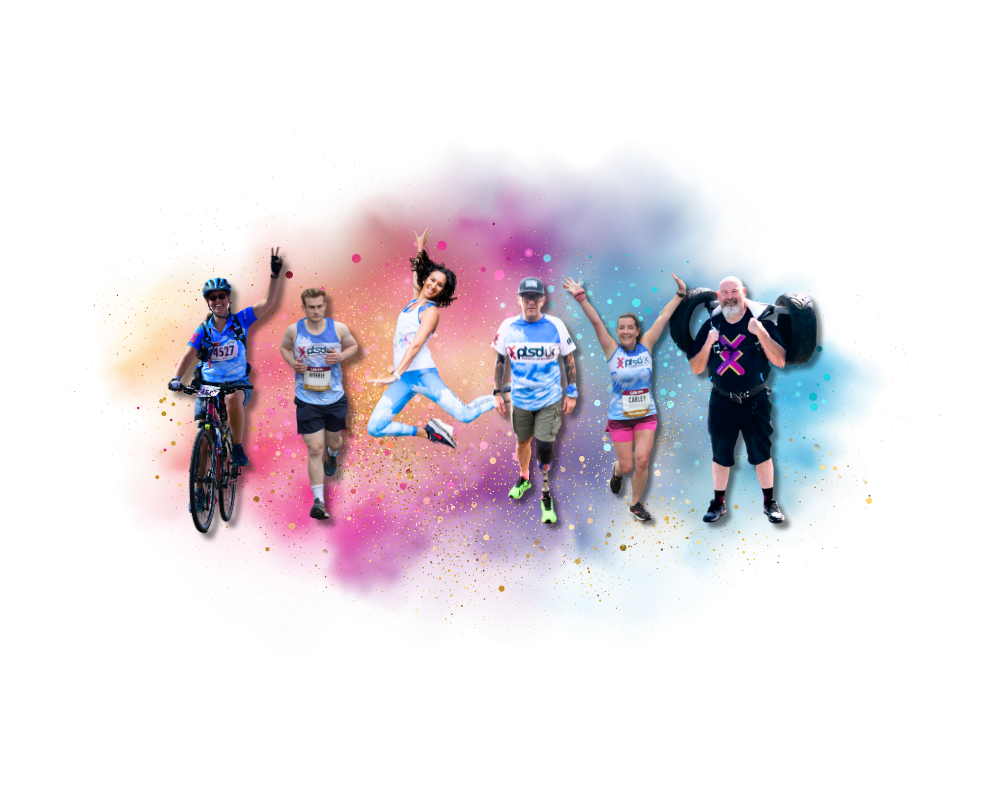
Whether you’re considering iconic events like the Great North Run, exhilarating experiences like skydiving, our unique PTSD UK events such as the Wagathon or Dip a Day December, or planning your own fundraiser, every penny you raise really can change the lives of people affected by PTSD & C-PTSD.

Find us on Facebook
Join us on Facebook for the latest news, updates, personal stories, helpful articles, and community support. It’s a great place to stay connected and see how your support is making a difference.
Join the Conversation
Find us on Instagram
Follow us on Instagram for powerful quotes, uplifting messages, behind-the-scenes updates, and visual resources designed to support and inspire anyone affected by PTSD or C-PTSD.
Find Daily Inspiration
Find us on TikTok
Catch us on TikTok for quick, engaging videos that raise awareness, share real experiences, and highlight the small steps that can lead to big changes in PTSD and C-PTSD recovery.
Watch & LearnNewsletter sign up to go here