What is trauma?
Research shows that around 50% of people will experience a traumatic event at some point in their lives. Trauma can affect anyone, regardless of age, background, or circumstances.
A traumatic event is one that overwhelms your ability to cope. It might evoke feelings of fear, helplessness, or horror, especially in response to danger or threat—either to yourself or someone else.
Examples include:
- Assault or abuse (including domestic violence and childhood trauma)
- Serious accidents or injury
- Natural disasters
- War or terrorism
- Traumatic birth
- Sudden or violent loss
You might be affected by trauma if you:
- Experienced the event directly
- Witnessed it happening to someone else
- Found out someone close to you was traumatised
- Regularly encountered distressing details (such as through your work)
A normal response to an abnormal event
In the aftermath of trauma, it’s completely normal to experience distress. You may feel on edge, have difficulty sleeping, or find that you’re constantly thinking about what happened. These are part of your body’s fight-or-flight response, designed to protect you in the face of danger.
People often describe feeling emotionally numb, hyper-alert, disconnected from others, or struggling with a sense of safety. These reactions usually settle over time. But if they continue for longer than a few months and interfere with daily life, it may be a sign of PTSD or C-PTSD.
Trauma reactions vs PTSD and C-PTSD
While many people recover from trauma on their own, around 20% go on to develop PTSD. In the UK, that’s approximately 6.6 million people—yet many still go undiagnosed or unsupported.
PTSD symptoms typically fall into four categories:
- Re-experiencing the trauma through flashbacks, nightmares, or intrusive memories
- Avoidance of reminders of the event
- Negative changes in mood and thinking, including shame, guilt, or hopelessness
- Hyperarousal, such as feeling constantly on edge, anxious, or easily startled
Complex PTSD (C-PTSD) is a form of PTSD caused by prolonged or repeated trauma—such as ongoing abuse or neglect. It shares the same core symptoms but may also include:
- Persistent difficulties in relationships
- Negative self-image
- Emotional dysregulation
Everyone’s experience of PTSD and C-PTSD is unique. Symptoms can fluctuate, appear years after the trauma, or worsen over time if left untreated.
“When you have PTSD, the world feels unsafe. You may have upsetting memories, feel on edge, or have trouble sleeping. You may also try to avoid things that remind you of your trauma — even things you used to enjoy.”
PTSD is a normal reaction to an abnormal situation
The human body is a complex system with intricate feedback loops between its parts and the brain. Any disruption to these loops, as seen in traumatic experiences, can impact the entire system.
In simple terms, PTSD and C-PTSD are a memory processing error, stemming from the brain’s suspension of normal function during trauma.
When faced with intense fear or trauma, the body and mind switch on ‘survival mode’ actions like fight, flight, freeze, fawn and flop, and temporarily suspend regular operations to cope and survive. Until the danger passes, many systems in the body are put on hold or adapted: your digestive system pauses, blood will flow away from your extremities and into your muscles ready to ‘flee’ or ‘fight’, your heart rate will increase, pupils dilate, reproductive systems pause, and the ‘unimportant’ task of memory creation is put on hold. This means that the mind does not produce a memory for this traumatic event in the ‘normal’ way.
Under normal/non-traumatic circumstances, when information comes into our memory system (from sensory input such as what we can see, hear, taste, and smell), it needs to be changed into a form that the system can cope with, so that it can be stored. If the encoding doesn’t take place due to a traumatic situation – the memory can’t be processed. Instead, it is stored randomly, in pieces, in a variety of places within the brain.
Eventually, when the mind presents the ‘memory’ of the trauma for ‘filing’, or it is triggered by a smell, a place, or a person etc, it does not recognise it as a memory. As it understands, ‘the brain is in the middle of the dangerous event – it is not ‘outside’ looking in at this event, and therefore the entire system is not easily subject to rational control.’ These flashbacks are incredibly distressing. Reliving the trauma as if it were happening RIGHT NOW. The elements such as the facts of what happened, the emotions associated with the trauma and the sensations touch, taste, sound, vision, movement, and smell can be presented by the mind as real time information. They may also present as nightmares, and intrusive unwanted memories.
These re-experiences and flashbacks are a result of the mind trying to file away the distressing memory, and understandably can be very unpleasant and frightening because they repeatedly expose the sufferer to the original trauma. This danger response also sets off other stress reactions in the body such as blood pressure and heart rate increasing, blood sugar is raised and digestion is affected. The body enters a state of hypervigilance so it is aware of other dangers around it, with increased startle responses.
Your body and mind are doing things they SHOULD do when presented with a threat. But your body is designed for this to be an immediate fix, for short term fix which allows the body to settle once the threat has been resolved. But with PTSD and C-PTSD, it is almost perpetual. A prolonged, extreme or repetitive trauma can physically injure the brain. ‘The best analogy is that the amygdala stays in the alert state so long that it gets ‘stuck’ there. It keeps the body from operating a healthy combination of… systems’.
Your brain (hypothalamic-pituitary-adrenal (HPA) axis) is activated by the stressful stimuli, and the disruption that occurs with PTSD and C-PTSD can be conceptualised as a kind of “false alarm”. This ‘dysfunction’ of the HPA system is thought to produce hippocampal damage manifested as impaired memory. Simply put, PTSD and C-PTSD physiologically change your brain. The amygdala is responsible for fear responses and fear conditioning. Exposure to trauma can activate the amygdala and related structures inappropriately resulting in hypervigilance and inappropriate fear responses. Additionally, the part of your brain which regulates inappropriate fear responses (the medial prefrontal cortex) is impaired in people with PTSD and C-PTSD. You can find out more about the regions of the brain involved in memory processing that have been implicated (hippocampus, amygdala, and frontal cortex) here.
As the mind continues to try to repeatedly process the memory, and the brain keeps re-triggering itself into ‘danger’ mode, the individual also finds that their levels of awareness might change. People can become find it difficult to control their emotions and suffer intense symptoms of anxiety. This can present itself as both physical; shortness of breath, tight muscles, profuse sweating and a racing heart, as well as emotional: feeling on edge, hypervigilance (looking out for signs of danger all the time), avoidance of reminders of the trauma or feeling panicky.
The brain is programmed to process memories, and so the more the individual avoids things like thinking about the trauma, the less likely is it that any memory processing will actually occur, and the more likely it is that further attempts at filing a memory will occur automatically. This ultimately leads to further nightmares, flashbacks and intrusive memories which lead on to further hyper-arousal and emotional numbing, and this in turn leads on to more avoidance and so on. This is how the symptoms clusters perpetuate themselves in a vicious cycle which can go on for years – and when it goes untreated, PTSD and C-PTSD can last for decades.
‘The injury is real. The injury is physical. It is not mere confusions or misdirected thinking, or sign of a weak character. It most certainly is not a case of ‘Just get over it’.
Recovery is possible
The most important thing to know? You can heal.
There are evidence-based treatments that can help reprocess traumatic memories and reduce or even eliminate symptoms. These include therapies such as:
- EMDR (Eye Movement Desensitisation and Reprocessing)
- Trauma-focused Cognitive Behavioural Therapy (CBT)
- Somatic therapies, mindfulness, and grounding techniques
Therapy helps your brain complete the memory processing that was interrupted during trauma. With support, many people are able to recover from PTSD and C-PTSD, or manage symptoms in a way that allows them to reclaim their lives.
Social MEDIA SHARE THIS PAGE
- Bowirrat, A., Chen, T. J., Blum, K., Madigan, M., Bailey, J. A., Chuan Chen, A. L., Downs, B. W., Braverman, E. R., Radi, S., Waite, R. L., Kerner, M., Giordano, J., Morse, S., Oscar-Berman, M., & Gold, M. (2010). Neuro-psychopharmacogenetics and Neurological Antecedents of Posttraumatic Stress Disorder: Unlocking the Mysteries of Resilience and Vulnerability. Current neuropharmacology, 8(4), 335–358. https://doi.org/10.2174/157015910793358123
- Crocq, M. A., & Crocq, L. (2000). From shell shock and war neurosis to posttraumatic stress disorder: a history of psychotraumatology. Dialogues in clinical neuroscience, 2(1), 47–55. https://doi.org/10.31887/DCNS.2000.2.1/macrocq
- Howard, S., & Crandall, M. (2007). Post Traumatic Stress Disorder What Happens in the Brain? Journal of the Washington Academy of Sciences, 93(3), 1-17. Retrieved April 14, 2021, from http://www.jstor.org/stable/24536468
- What Is Posttraumatic Stress Disorder?
- Ayurvedic Perspectives On Post Traumatic Stress Disorder
- PTSD: National Center for PTSD
- Introduction to Memory
- POST-TRAUMATIC STRESS DEFINED
- Self-help work booklet for people experiencing Post-Traumatic Stress Disorder (PTSD) and Complex PTSD
- How PTSD went from ‘shell-shock’ to a recognised medical diagnosis
Info goes here
Join us in supporting the journey toward healing and recovery for everyone with PTSD & C-PTSD
Help us provide vital support, information, and resources across the UK
Printed Support Items
Our Supporters store offers a variety of merchandise to help raise awareness, along with practical items to support your treatment and recovery like our Ink and Insight Toolkit, Emotional Wheel Postcards, PTSD & C-PTSD Symptom Tracker sheets, Safety Plan worksheets and Communication Cards.

PTSD UK Supporters’ Store
Every item in our Supporters’ Store helps fund vital work for people affected by PTSD and C-PTSD.
Whether you’re buying for yourself or a loved one, every purchase supports awareness, recovery resources, and access to life-changing information. From empowering T-shirts, beanie hats and wristbands to practical support tools, everything has been created with care — and with hope in mind.

Insights: The PTSD UK Blog
Your Source for the Latest Support and Advice

AAA STANDARD BLOG POST
Lorem ipsum dolor sit amet, consectetur adipiscing elit. Donec tortor tortor, facilisis eu imperdiet sit amet, semper eget urna. Quisque sit amet erat risus. Pellentesque habitant morbi tristique senectus et netus et malesuada fames ac turpis egestas.
Read article
Why does Post Traumatic Stress Disorder make you so tired?
Lorem ipsum dolor sit amet, consectetur adipiscing elit. Donec tortor tortor, facilisis eu imperdiet sit amet, semper eget urna. Quisque sit amet erat risus. Pellentesque habitant morbi tristique senectus et netus et malesuada fames ac turpis egestas.
Read article
Hello world!
Lorem ipsum dolor sit amet, consectetur adipiscing elit. Donec tortor tortor, facilisis eu imperdiet sit amet, semper eget urna. Quisque sit amet erat risus. Pellentesque habitant morbi tristique senectus et netus et malesuada fames ac turpis egestas.
Read article
Hello world!
Lorem ipsum dolor sit amet, consectetur adipiscing elit. Donec tortor tortor, facilisis eu imperdiet sit amet, semper eget urna. Quisque sit amet erat risus. Pellentesque habitant morbi tristique senectus et netus et malesuada fames ac turpis egestas.
Read article
Hello world!
Lorem ipsum dolor sit amet, consectetur adipiscing elit. Donec tortor tortor, facilisis eu imperdiet sit amet, semper eget urna. Quisque sit amet erat risus. Pellentesque habitant morbi tristique senectus et netus et malesuada fames ac turpis egestas.
Read articleSign up to be a 'Friend of PTSD UK' today!
Unlock exclusive resources, discounts and events: just £5 per month
PTSD UK Impact Report 2025
Our Impact Report shines a light on the real-world difference PTSD UK is making for people affected by PTSD and C-PTSD across the country. Whether it’s helping someone access life-changing therapy, offering trusted information at a critical moment, or raising awareness that leads to understanding — your support is at the heart of it all.
If you’d like to see exactly how we’re turning compassion into action, and hope into healing, take a look at our latest Impact Report.

Practical Tools & Guidance
Resources & downloads for practical and tangible support
STANDARD PAGE TEMPLATERaising Funds, Changing Lives
Whether you’re considering iconic events like the Great North Run, exhilarating experiences like skydiving, our unique PTSD UK events such as the Wagathon or Dip a Day December, or planning your own fundraiser, every penny you raise really can change the lives of people affected by PTSD & C-PTSD.
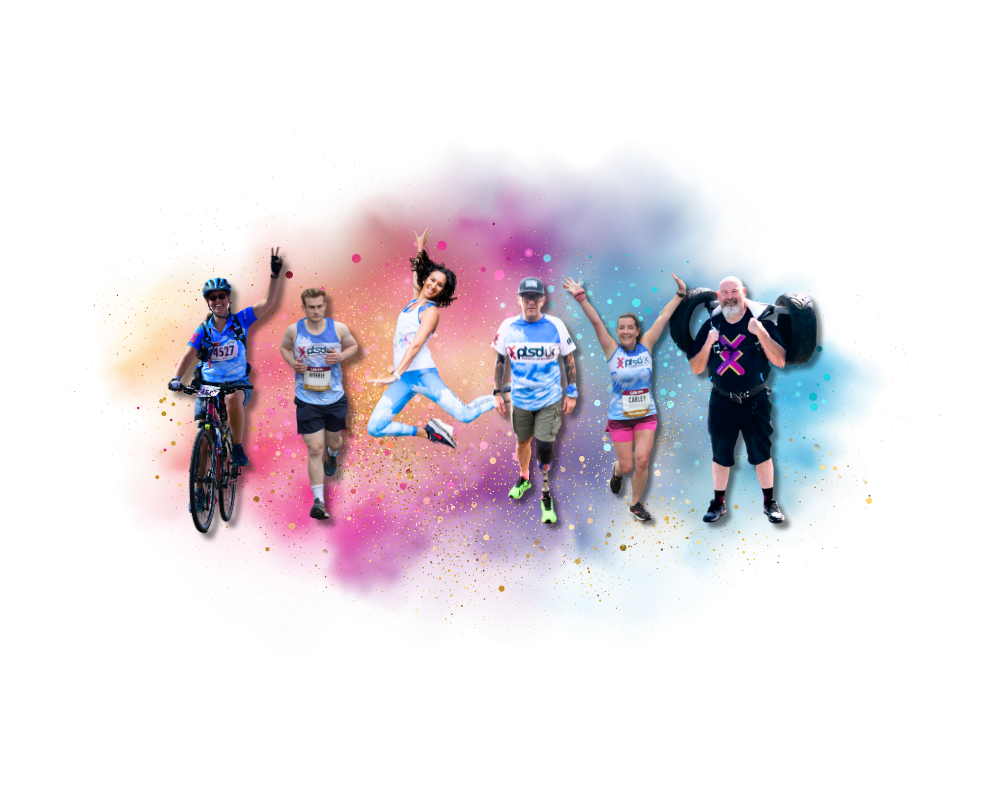
Create Your Own Fundraiser: Make a Difference Your Way
Whether it’s hosting a band night, swimming lengths for sponsorship, taking your dog on a fundraising walk, a sponsored leg wax or head shave, or hiking up Ben Nevis – the choice is yours! Every fundraiser helps us reach more people affected by PTSD & C-PTSD to help change lives.
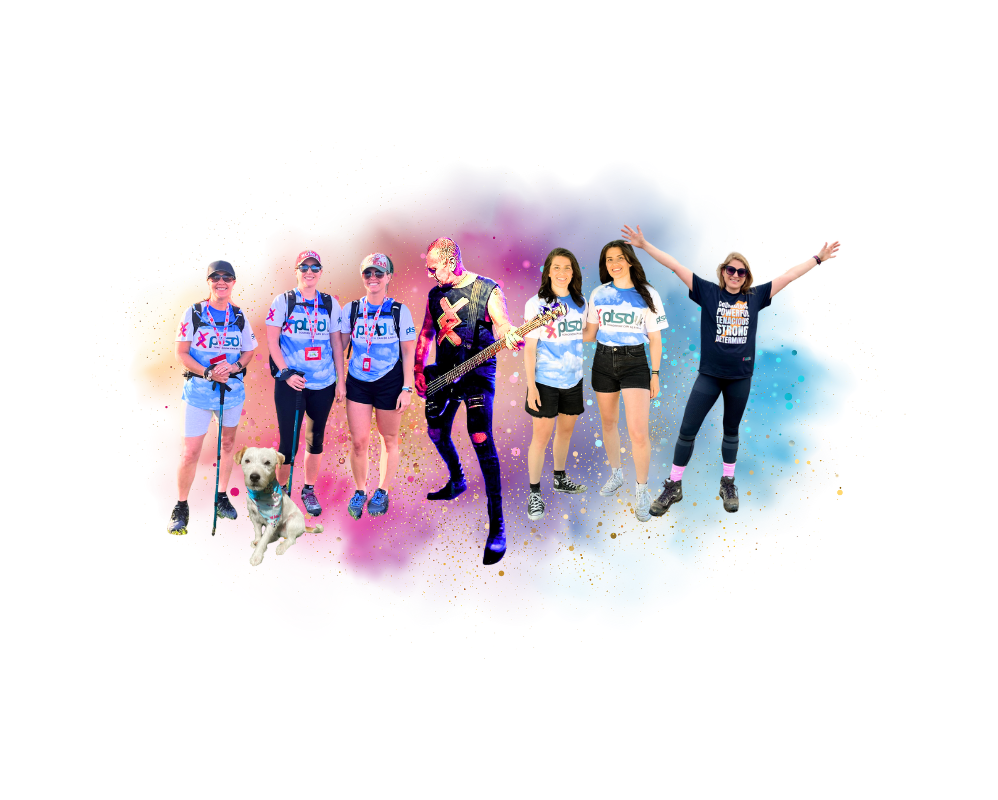

Find us on Facebook
Join us on Facebook for the latest news, updates, personal stories, helpful articles, and community support. It’s a great place to stay connected and see how your support is making a difference.
Join the Conversation
Find us on Instagram
Follow us on Instagram for powerful quotes, uplifting messages, behind-the-scenes updates, and visual resources designed to support and inspire anyone affected by PTSD or C-PTSD.
Find Daily Inspiration
Find us on TikTok
Catch us on TikTok for quick, engaging videos that raise awareness, share real experiences, and highlight the small steps that can lead to big changes in PTSD and C-PTSD recovery.
Watch & LearnNewsletter sign up to go here