Post Traumatic Stress Disorder (PTSD) and Complex-PTSD (C-PTSD) are conditions that some people develop after being exposed to trauma, including experiencing, witnessing, or even learning about a severely traumatic experience or events. It’s important to remember that any trauma can lead to PTSD or C-PTSD and the conditions are a natural, common, and understandable reaction to trauma.
The World Health Organisation estimates that globally, around 70% of people will experience a potentially traumatic event during their lifetime. While most people will experience only short-term distress after a traumatic event, it’s estimated that around 20% of people who experience trauma go on to develop PTSD or C-PTSD.
Understanding Trauma and its Impact
A traumatic event is one that causes intense feelings of fear, helplessness, or horror. These events often involve a perceived or actual threat to life or physical or emotional safety, but trauma can occur from any event that deeply disturbs a person. It’s crucial to understand that everyone’s experience of trauma is different, and what might seem manageable for one person could have a lasting impact on someone else.
Some examples of traumatic events that can lead to PTSD or C-PTSD include the following, but please note, this list is not exhaustive, and what is defined as ‘trauma’ is continually evolving as we understand more about the human experience:
- Road traffic incidents
- Being told you have a life-threatening illness
- Bereavement
- Violent personal assault, such as a physical attack, robbery, or mugging
- Medical staff
- Military combat and service
- Any form of abuse, including Childhood Abuse and Domestic Abuse
- Emergency Service Workers
- Burglary
- Events experienced in employment where you repeatedly see distressing images or hear details of traumatic events
- Caring for a child with a complex medical condition or disability
- Discrimination, victimisation and violence experienced by the LGBTQIA+ community
- Witnessing a suicide or attempted suicide
- Natural disasters such as flooding or an earthquake
- Terrorist attack
- Being kidnapped or held hostage
- Being bullied (as a child or adult)
- Traumatic childbirth (in people who give birth and birth partners)
- Refugees and asylum seekers
- Pregnancy Loss (including miscarriage, stillbirth, TFMR and ectopic pregnancy)
- Sexual Violence
- Prison Employees
- Admission to an Intensive Care Unit
- Racial Trauma
- Any event in which you fear for your life
What Causes PTSD?
PTSD develops when the brain struggles to process and store the traumatic experience as a memory. When someone goes through something traumatic, the body goes into survival mode, temporarily halting non-essential functions like digestion, skin repair, and even parts of the reproductive system. The brain’s focus shifts to keeping you safe – your heart rate speeds up, your muscles tighten, and your body gets ready to either fight or run away. During this time, memory processing is also put on hold. The brain essentially says, “Right now, it’s not important to make sense of what’s happening. The priority is survival – I’ll deal with the memory later.” Because of this, the traumatic event isn’t processed or stored as a usual memory would be.
Once the danger passes, ordinarily, the memory of what happened will be created, processed and stored during sleep later. Sleep is crucial for processing and consolidating memories, especially emotional ones. Research has shown that rapid eye movement (REM) sleep, the stage where vivid dreams occur, plays a particularly significant role in handling emotional memories. During REM sleep, the brain organises and stores these memories, helping to make sense of emotional experiences.
When someone experiences trauma, however, this process can be disrupted. Normally, REM sleep helps to “file away” emotional memories, but in the case of trauma, the brain can struggle to properly consolidate the traumatic experience and so it doesn’t get ‘stored’ as a past event.
Many of us have had the experience where the smell of suncream brings back memories of a wonderful holiday, or a familiar song reminds us of dancing with friends. Our senses—sights, sounds, smells, and emotions—can all trigger memories. But what happens when a trigger brings up a traumatic memory that hasn’t been properly processed? In this case, instead of recalling a past event, your brain presents the trauma as if it’s happening right now. Since the memory was never fully processed, your mind struggles to recognise it as something from the past, and instead, you relive the trauma in the present moment, as if it’s happening all over again.
As a result, the experience of what happened – along with the emotions tied to the trauma and the sensations like touch, taste, sound, sight, movement, and smell – can all be replayed in the mind in the form of flashbacks, making it feel as though the event is happening right now – they are experiencing it all again in real time.
The intense distress experienced during the traumatic event, combined with the ongoing emotional strain and re-experiencing through flashbacks afterward, leads to changes in the brain, which in turn cause the symptoms of PTSD and C-PTSD.
Causes of Complex PTSD (C-PTSD)
Complex PTSD (C-PTSD) is a subtype of PTSD that generally results from prolonged or repeated traumas. It often arises from situations where a person feels trapped or unable to escape, and the trauma happens over an extended period. While C-PTSD shares many symptoms with PTSD, it also comes with additional challenges, such as difficulties with emotional regulation, relationships, and self-perception.
C-PTSD can be caused by any of the traumas listed above, particularly if they are experienced repeatedly or in combination with other traumatic events. For instance, someone who faces long-term domestic abuse or sustained bullying may develop C-PTSD, as can those who endure multiple forms of trauma across their life. The repeated nature of the trauma can make it harder for the brain to recover, leading to more complex symptoms and potentially longer-lasting effects.
Why Do Some People Develop PTSD and Others Don’t?
Not everyone who experiences trauma will develop PTSD or C-PTSD. While it’s unclear exactly why some people develop it and others don’t, it’s understood that a combination of genetic, environmental, and psychological factors play a role. Two people can experience the same event, but one person might develop PTSD while the other doesn’t .Researchers are still trying to fully understand why this is, but it’s clear that PTSD and C-PTSD can affect anyone and certain factors can increase a person’s risk.
These are generally grouped into pre-trauma, peri-trauma, and post-trauma factors.
- Pre-trauma factors: These include characteristics a person may have before the trauma occurs
- Peri-trauma factors: These refer to what happens during the traumatic event itself
- Post-trauma factors: These relate to what happens after the traumatic event

Furthermore, research shows that women and people assigned female at birth (AFAB) are two to three times more likely to develop PTSD compared to men and people assigned male at birth (AMAB), with a lifetime prevalence of around 10-12% for women and people AFAB and 5-6% for men and people AMAB. While we are still making progress in gender- and sex-sensitive research, several factors help explain this difference. These include psychosocial and biological influences, such as the role of oxytocin. Women and people AFAB tend to have a more sensitised hypothalamus-pituitary-adrenal (HPA) axis in the brain, while men and people AMAB typically have a more reactive physiological hyperarousal system, which affects how the brain responds to stress and fear.
PTSD and C-PTSD can develop from any trauma, big or small. It’s not a sign of weakness, but rather a natural reaction when the brain struggles to process an overwhelming experience. Understanding the causes of PTSD and C-PTSD can help us recognise its impact on individuals and offer more empathetic, effective support. Whether someone has been through a single traumatic event or has faced prolonged trauma, there is help available. Recovery is possible, and no one has to face it alone.
If you or someone you know has experienced trauma and is struggling with symptoms of PTSD or C-PTSD, it’s important to reach out.
Social MEDIA SHARE THIS PAGE
- Emotional Memory Processing during REM Sleep with Implications for Post-Traumatic Stress Disorder – Young-Ah Rho, Jason Sherfey, Sujith Vijayan, Journal of Neuroscience 18 January 2023, 43 (3) 433-446; DOI: 10.1523/JNEUROSCI.1020-22.2022
- Post-traumatic stress disorder in UK police officers, Ben Green, CURRENT MEDICAL RESEARCH AND OPINION® VOL. 20, NO. 1, 2004, FastTrack PREPRINT: P1–P5
- Sayed, S., Iacoviello, B.M. & Charney, D.S. Risk Factors for the Development of Psychopathology Following Trauma. Curr Psychiatry Rep 17, 70 (2015). https://doi.org/10.1007/s11920-015-0612-y
- Sareen J. (2014). Posttraumatic stress disorder in adults: impact, comorbidity, risk factors, and treatment. Canadian journal of psychiatry. Revue canadienne de psychiatrie, 59(9), 460–467. https://doi.org/10.1177/070674371405900902
- Strengthen your brain by resting it
- Overview – Post-traumatic stress disorder
Info goes here
Join us in supporting the journey toward healing and recovery for everyone with PTSD & C-PTSD
Help us provide vital support, information, and resources across the UK
PTSD UK Supporters’ Store
Every item in our Supporters’ Store helps fund vital work for people affected by PTSD and C-PTSD.
Whether you’re buying for yourself or a loved one, every purchase supports awareness, recovery resources, and access to life-changing information. From empowering T-shirts, beanie hats and wristbands to practical support tools, everything has been created with care — and with hope in mind.

Insights: The PTSD UK Blog
Your Source for the Latest Support and Advice

AAA STANDARD BLOG POST
Lorem ipsum dolor sit amet, consectetur adipiscing elit. Donec tortor tortor, facilisis eu imperdiet sit amet, semper eget urna. Quisque sit amet erat risus. Pellentesque habitant morbi tristique senectus et netus et malesuada fames ac turpis egestas.
Read article
Why does Post Traumatic Stress Disorder make you so tired?
Lorem ipsum dolor sit amet, consectetur adipiscing elit. Donec tortor tortor, facilisis eu imperdiet sit amet, semper eget urna. Quisque sit amet erat risus. Pellentesque habitant morbi tristique senectus et netus et malesuada fames ac turpis egestas.
Read article
Hello world!
Lorem ipsum dolor sit amet, consectetur adipiscing elit. Donec tortor tortor, facilisis eu imperdiet sit amet, semper eget urna. Quisque sit amet erat risus. Pellentesque habitant morbi tristique senectus et netus et malesuada fames ac turpis egestas.
Read article
Hello world!
Lorem ipsum dolor sit amet, consectetur adipiscing elit. Donec tortor tortor, facilisis eu imperdiet sit amet, semper eget urna. Quisque sit amet erat risus. Pellentesque habitant morbi tristique senectus et netus et malesuada fames ac turpis egestas.
Read article
Hello world!
Lorem ipsum dolor sit amet, consectetur adipiscing elit. Donec tortor tortor, facilisis eu imperdiet sit amet, semper eget urna. Quisque sit amet erat risus. Pellentesque habitant morbi tristique senectus et netus et malesuada fames ac turpis egestas.
Read articleSign up to be a 'Friend of PTSD UK' today!
Unlock exclusive resources, discounts and events: just £5 per month
PTSD UK Impact Report 2025
Our Impact Report shines a light on the real-world difference PTSD UK is making for people affected by PTSD and C-PTSD across the country. Whether it’s helping someone access life-changing therapy, offering trusted information at a critical moment, or raising awareness that leads to understanding — your support is at the heart of it all.
If you’d like to see exactly how we’re turning compassion into action, and hope into healing, take a look at our latest Impact Report.

Practical Tools & Guidance
Resources & downloads for practical and tangible support
STANDARD PAGE TEMPLATECreate Your Own Fundraiser: Make a Difference Your Way
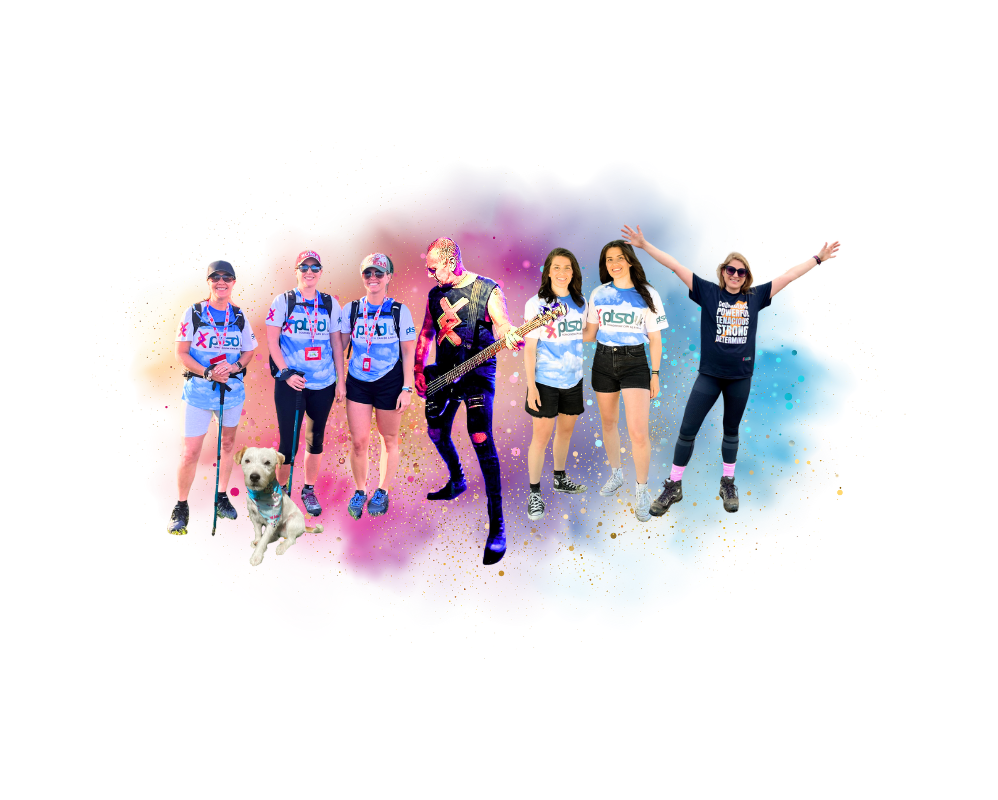
Whether it’s hosting a band night, swimming lengths for sponsorship, taking your dog on a fundraising walk, a sponsored leg wax or head shave, or hiking up Ben Nevis – the choice is yours! Every fundraiser helps us reach more people affected by PTSD & C-PTSD to help change lives.

Find us on Facebook
Join us on Facebook for the latest news, updates, personal stories, helpful articles, and community support. It’s a great place to stay connected and see how your support is making a difference.
Join the Conversation
Find us on Instagram
Follow us on Instagram for powerful quotes, uplifting messages, behind-the-scenes updates, and visual resources designed to support and inspire anyone affected by PTSD or C-PTSD.
Find Daily Inspiration
Find us on TikTok
Catch us on TikTok for quick, engaging videos that raise awareness, share real experiences, and highlight the small steps that can lead to big changes in PTSD and C-PTSD recovery.
Watch & LearnNewsletter sign up to go here