The Havening Techniques – more formally known as Amygdala Depotentiation – is a psychosensory therapy which is designed to change the brain to de-traumatize the memory and remove its negative effects from both our psyche and body including deep rooted anxiety, rumination, and severe, instinctive negative responses.

The name Havening comes from the fact it is a step-by-step process that puts your emotional responses into a safe space – a haven.

As part of its protocol The Havening Techniques uses the sensory input of human touch as a therapeutic tool which they have identified as ‘Havening Touch’. The process of the Havening Technique requires touch, however, the decision of who should provide the touch must be made jointly.

Similar self-comforting and supported-distraction techniques have been used for many years. You will also find that therapists have their own version of what Havening involves.

Its merits for supporting people with PTSD and other conditions are also open to opinion. Though for some individuals, it can provide an important way to break a cycle of negative emotional responses.

This guide will answer questions such as ‘What is Havening?’ and how does Havening help PTSD?

The science behind the therapy

The amygdala is an area at the base of the human brain that is repeated on both hemispheres (sides). It is where emotions are encoded and where they are attached to memories, associations and responses.

Sometimes, this process creates poor associations within your emotional landscape. For, example, in PTSD a source of anxiety gets attached to a remembered fear of having your life threatened. It’s a pattern that gets ‘stuck’ and which can create an immediate negative reaction – fight, flight or freeze. Logical analysis struggles to catch up with this ingrained reaction.

The Havening Technique aims to interrupt and divert this activity in your amygdala. By breaking the negative association, it sends you instead to an emotional refuge.

Who invented Havening?

The Havening Technique was developed by US neuroscientist and Harvard Graduate Dr Ronald Ruden. He explored the concept in his 2010 book ‘When the Past is Always Present’.

However, this psychosensory technique received its biggest publicity boost when Paul McKenna – a celebrity hypnotist – became a firm believer in its value. Paul McKenna drew substantial media attention when he began offering workshops and therapy sessions in Havening. The problem with this is, Havening was then often assumed to be a form of hypnotism. Which is not correct.

What does Havening involve?

The central element of Havening in all interpretations by therapists is touch. Havening involves a distinctive self-soothing motion with crossed arms, gently but noticeably stroking from shoulders to elbows.

There are also versions which involve tapping your collar bone and stroking the palms of your hands and around your eyes. This is all to create a sense of wellbeing and safety.

Another common feature is having your eyes closed and exploring the negative emotional associations and reactions that are a feature of PTSD and other mental health conditions. Either via support from a therapist or using your own thought processes, you are then distracted away from the negative emotional area you just explored. As the self-soothing touch continues.

The distraction involves going to a safe place, which is often a beach. You then mentally walk 20 purposeful steps in your imagination.

In some interpretations of the Havening Technique, therapists also ask you to sing a simple, familiar song with a soothing pattern. For instance, the Happy Birthday or Twinkle Twinkle Little Star melodies.

The theory is that this combination of touch, sound and mental distancing, ‘trains’ your amygdala to break its connection to a negative reaction. Instead, you will always be automatically and instantly rerouted to a positive association.

What if I’m not comfortable being touched?

‘Havening Touch involves a simple touch of the hands, upper arm, and face. Even though a trusted practitioner will be performing Havening Touch, it is essential as part of the informed consent process that permission be obtained for this aspect of the session. There are certain circumstances where the practitioner or the client may not wish to touch or be touched. This is not a problem, as the client can self-apply Havening Touch.’

Does Havening work?

Though it has been around for some years, there has not yet been sufficient research or data to provide indisputable evidence of Havening’s effectiveness.

There was a study with limited scope in 2015, which did show promising results. However, that was in relation to depression, anxiety and impaired functioning affecting workplace absenteeism. Participants reported a general improvement in their sense of wellbeing, which did then appear to reduce their ‘occupation impairment’.

One of the concerns expressed about Havening is that it diverts people away from other therapies, which are used to address the roots causes of trauma and teach coping mechanisms. While some proponents of Havening see it as a therapy that changes the brain, dismantling the link to trauma memories and responses. Others see it as a temporary soothing and distracting method.

Can Havening help with PTSD?

It is always risky to assume any of the ways to treat PTSD are ‘quick fixes’, including ones that show promise in redirecting negative emotional responses.

However, when offered as part of a carefully formulated programme of therapy and coping techniques for PTSD, Havening may offer some people a welcome source of relief.

Keep in mind that some people who have used it report feeling light-headed, emotionally numb or uncomfortable and irritated by the process. It is all about having realistic expectations, and finding what works for you!

Can I do Havening to myself?

‘The Havening Techniques are powerful tools that can be used to treat the consequences of encoded traumatic or stressful memories.’ and although there are online tutorial videos which can show you how to do the technique on yourself,  please do not use the Havening Technique with yourself for a serious trauma or if you suffer from any psychological disorders like PTSD or C-PTSD. ‘We advise that you seek the help of a professional mental health care provider who is certified in the Havening Technique if you have experienced severe trauma or suffer from a psychological disorder.’

When exploring your recovery options for PTSD or C-PTSD, it’s essential to find an approach that addresses both the symptoms you’re experiencing and the underlying trauma that caused them. The most effective treatments work not just to manage distress in the moment, but to help your brain process what happened and reduce long-term impact.

In the UK, the NICE guidelines (updated in 2018) recommend a number of trauma-focused psychological therapies for adults with PTSD and C-PTSD. These include Eye Movement Desensitisation and Reprocessing (EMDR), Trauma-focused Cognitive Behavioural Therapy (CBT), Narrative Exposure Therapy (NET) and Prolonged Exposure Therapy (PE). These therapies are backed by extensive research and are considered first-line treatments for PTSD and C-PTSD.

It’s important to remember that recovery isn’t one-size-fits-all. While these approaches have helped many people, everyone’s healing journey is unique. Some people may also find additional support through other therapies, self-help tools, or lifestyle changes.

Please note: nothing here is intended as a medical recommendation. Instead, it’s a guide to help you understand what’s available. Always work with a qualified professional to explore the best treatment options for you.

Social MEDIA SHARE THIS PAGE

  • Thandi Gursimran, Tom Deborah, Gould Matthew, McKenna Paul , Greenberg Neil; Impact of a Single-Session of Havening, Health Science Journal ISSN 1791-809X, 2015 Vol. 9 No. 5:1
  • Havening Techniques

Join us in supporting the journey toward healing and recovery for everyone with PTSD & C-PTSD

Help us provide vital support, information, and resources across the UK

Printed Support Items

Our Supporters store offers a variety of merchandise to help raise awareness, along with practical items to support your treatment and recovery like our Ink and Insight Toolkit, Emotional Wheel Postcards, PTSD & C-PTSD Symptom Tracker sheets, Safety Plan worksheets and Communication Cards.

Find out more


Printed support items offered by PTSD UK

Insights: The PTSD UK Blog

Your Source for the Latest Support and Advice

Sign up to be a 'Friend of PTSD UK' today!

Unlock exclusive resources, discounts and events: just £5 per month

PTSD UK Impact Report 2025

Our Impact Report shines a light on the real-world difference PTSD UK is making for people affected by PTSD and C-PTSD across the country. Whether it’s helping someone access life-changing therapy, offering trusted information at a critical moment, or raising awareness that leads to understanding — your support is at the heart of it all.

If you’d like to see exactly how we’re turning compassion into action, and hope into healing, take a look at our latest Impact Report.

Read the PTSD UK Impact Report

PTSD UK Impact Report

Supportive Tools

Find grounding exercises, therapy resources and more

STANDARD PAGE TEMPLATE

Workbooks & Downloads

Download transformative workbooks for PTSD healing

STANDARD PAGE TEMPLATE

Books and Videos

Valuable knowledge & support for your healing journey

STANDARD PAGE TEMPLATE

Practical Tools & Guidance

Resources & downloads for practical and tangible support

STANDARD PAGE TEMPLATE

Raising Funds, Changing Lives

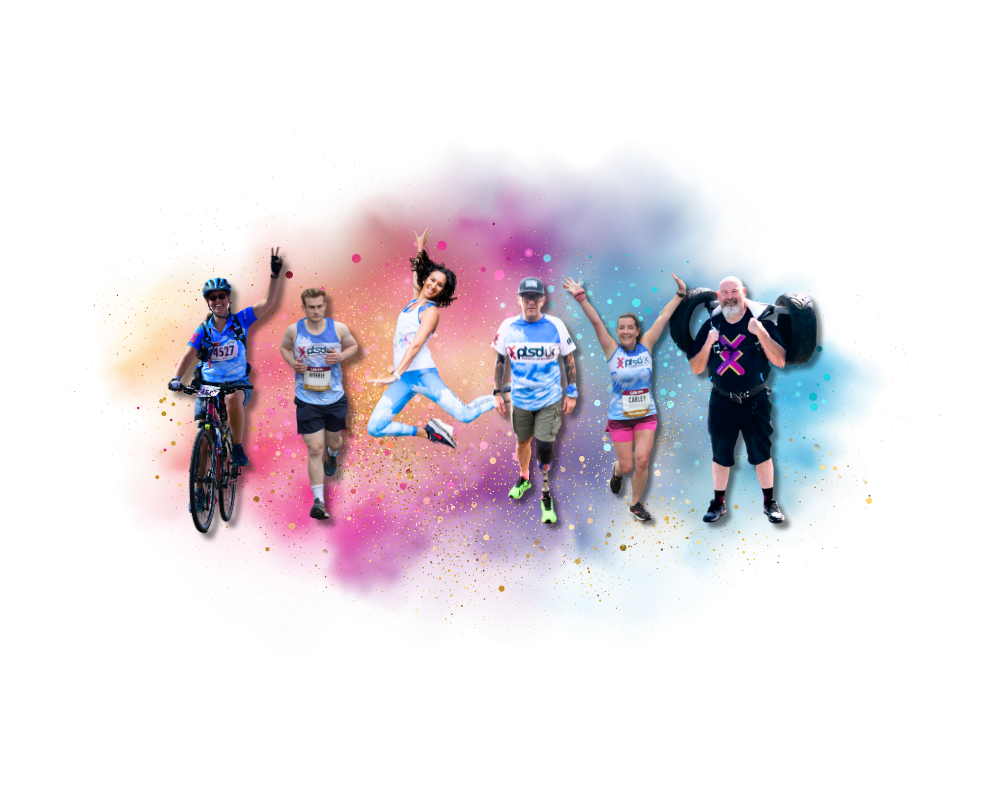
Whether you’re considering iconic events like the Great North Run, exhilarating experiences like skydiving, our unique PTSD UK events such as the Wagathon or Dip a Day December, or planning your own fundraiser, every penny you raise really can change the lives of people affected by PTSD & C-PTSD.

I want to get involved!


People in PTSD UK tshirts

Newsletter sign up to go here

Menu
Search
Basket

No products in the basket.