There are abundant misconceptions about meditation. Including that it always involves clearing your mind, in silence, to create spiritual enlightenment. The stereotypical meditative pose is sitting crossed-legged on the floor, with your hands either in a prayer position or resting on your knees with fingers poised upwards.

Meditation is, in fact, far more variable and flexible. You can even do it ‘on the move’!

In essence, it’s a series of steps to create heightened awareness, focus and calmness.

This makes meditation a valuable psychotherapeutic technique. Including to help people cope with PTSD and other mental health conditions. It can give individuals better control of their minds and emotions, using a series of tasks, such as deep breathing.

This article explores the science behind meditation and its application for PTSD.

The brain and meditative state

It’s not surprising that so many religions and cultures have incorporated meditation into their practices over the centuries, as its values are rooted in human physiology. Our brain and neurological system are complex, and in many respects still a scientific mystery! However, meditation primarily impacts on the prefrontal cortex and amygdala.

The prefrontal cortex is our information conduit. It processes stimulation from all our senses and sorts it accordingly. Including setting goals and actions. From a meditative state, your prefrontal cortex sends important information to your amygdala. This is an almond-shaped area on both sides of your brain’s base. The amygdala processes emotional responses and creates associations and reactions.

To illustrate the interplay between the two, if your prefrontal cortex receives information about a loud bang, your amygdala may automatically associate this information with fear of harm. It can take longer for logic to catch up with this immediate emotional reaction.

With meditation, you interrupt some of these associations and responses and create a sense of calm.

Types of meditation therapy

The main types of meditation involve relative or absolute practices.

With relative meditation, the onus is on visualisations, affirmations and relaxation techniques. This all soothes the neural structures in the brain that deal with emotional behaviour. Meditation builds positive emotions and associations and restores equilibrium and resilience.

For example, spoken affirmations (phrases such as ‘I am safe and happy’ or ‘I am worthy and loved’) stimulate your prefrontal cortex to send positive information to your amygdala.

It’s also possible to use visualisation to retrain the amygdala to take responses into a safe place. (This is like the Havening Technique). For instance, the loud noise becomes a firework party with the people you love. Or, when overly anxious, you visualise yourself walking on a tropical beach.

Absolute meditation is focused on mindfulness and exploring your ‘true self’. It can guide individuals with PTSD to explore their experiences in a state of relaxation and empowerment. Another category of absolute practice is ‘Compassion Meditation’ when the individual does exercises to focus on building empathy and caring.

Mindfulness v meditation

Is mindfulness another word for meditation? The short answer is no.

Meditation uses purposeful introspection to break negative emotional cycles and to create a sense of control and calm. This can include mindfulness meditation when the individual intensely focuses on their sense of self. In PTSD, the focus can be on accepting experiences and painful memories.

However, you can be mindful – aware and focused – without meditating. Such as purposeful walking, breathing or listening to music to switch off from all other stimulation. It’s a valuable way to deliberately de-stress and ‘reboot’.

Meditation and PTSD

Use of meditation to ease PTSD symptoms is growing in acceptance and is the subject of clinical studies.

One study was conducted jointly by university researchers from the US and South Africa. They tested the effectiveness of transcendental meditation, to support South African students with a diagnosis of PTSD. Transcendental meditation uses patterns of sound (chanting) and mantras (repeated affirmations) to create serenity. It is one of the oldest forms of meditation, with its roots in spirituality.

The success was significant, reducing PTSD symptoms and improving depression. Research author Michael Dillbeck said: “Our study shows that after 3 months of meditation, the group, on average, was out of PTSD. It offers a way for others to effectively deal with this problem.”

The findings of a 2016 study into the ‘Impact of Transcendental Meditation on Psychotropic Medication Use Among Active Duty Military Service Members With Anxiety and PTSD’ were reported in the Military Medicine Journal.

Over 83% of trial participants reduced or even stopped using psychotropic drugs for PTSD, after one month. Compared to around 59% in a control group who were not meditating.

The importance of guided meditation in PTSD

This all adds to evidence that meditation not only calms and relaxes but also helps to heal.

However, it needs to be part of a programme of PTSD support. Particularly as meditation can leave too much ‘headspace’ for flashbacks and panic attacks in some individuals. Therapists and counsellors with expertise in PTSD can guide people towards meditation in relation to trauma.

When exploring your recovery options for PTSD or C-PTSD, it’s essential to find an approach that addresses both the symptoms you’re experiencing and the underlying trauma that caused them. The most effective treatments work not just to manage distress in the moment, but to help your brain process what happened and reduce long-term impact.

In the UK, the NICE guidelines (updated in 2018) recommend a number of trauma-focused psychological therapies for adults with PTSD and C-PTSD. These include Eye Movement Desensitisation and Reprocessing (EMDR), Trauma-focused Cognitive Behavioural Therapy (CBT), Narrative Exposure Therapy (NET) and Prolonged Exposure Therapy (PE). These therapies are backed by extensive research and are considered first-line treatments for PTSD and C-PTSD.

It’s important to remember that recovery isn’t one-size-fits-all. While these approaches have helped many people, everyone’s healing journey is unique. Some people may also find additional support through other therapies, self-help tools, or lifestyle changes.

Please note: nothing here is intended as a medical recommendation. Instead, it’s a guide to help you understand what’s available. Always work with a qualified professional to explore the best treatment options for you.

Social MEDIA SHARE THIS PAGE

Join us in supporting the journey toward healing and recovery for everyone with PTSD & C-PTSD

Help us provide vital support, information, and resources across the UK

Printed Support Items

Our Supporters store offers a variety of merchandise to help raise awareness, along with practical items to support your treatment and recovery like our Ink and Insight Toolkit, Emotional Wheel Postcards, PTSD & C-PTSD Symptom Tracker sheets, Safety Plan worksheets and Communication Cards.

Find out more


Printed support items offered by PTSD UK

Insights: The PTSD UK Blog

Your Source for the Latest Support and Advice

Sign up to be a 'Friend of PTSD UK' today!

Unlock exclusive resources, discounts and events: just £5 per month

PTSD UK Impact Report 2025

Our Impact Report shines a light on the real-world difference PTSD UK is making for people affected by PTSD and C-PTSD across the country. Whether it’s helping someone access life-changing therapy, offering trusted information at a critical moment, or raising awareness that leads to understanding — your support is at the heart of it all.

If you’d like to see exactly how we’re turning compassion into action, and hope into healing, take a look at our latest Impact Report.

Read the PTSD UK Impact Report

PTSD UK Impact Report

Supportive Tools

Find grounding exercises, therapy resources and more

STANDARD PAGE TEMPLATE

Workbooks & Downloads

Download transformative workbooks for PTSD healing

STANDARD PAGE TEMPLATE

Books and Videos

Valuable knowledge & support for your healing journey

STANDARD PAGE TEMPLATE

Practical Tools & Guidance

Resources & downloads for practical and tangible support

STANDARD PAGE TEMPLATE

Raising Funds, Changing Lives

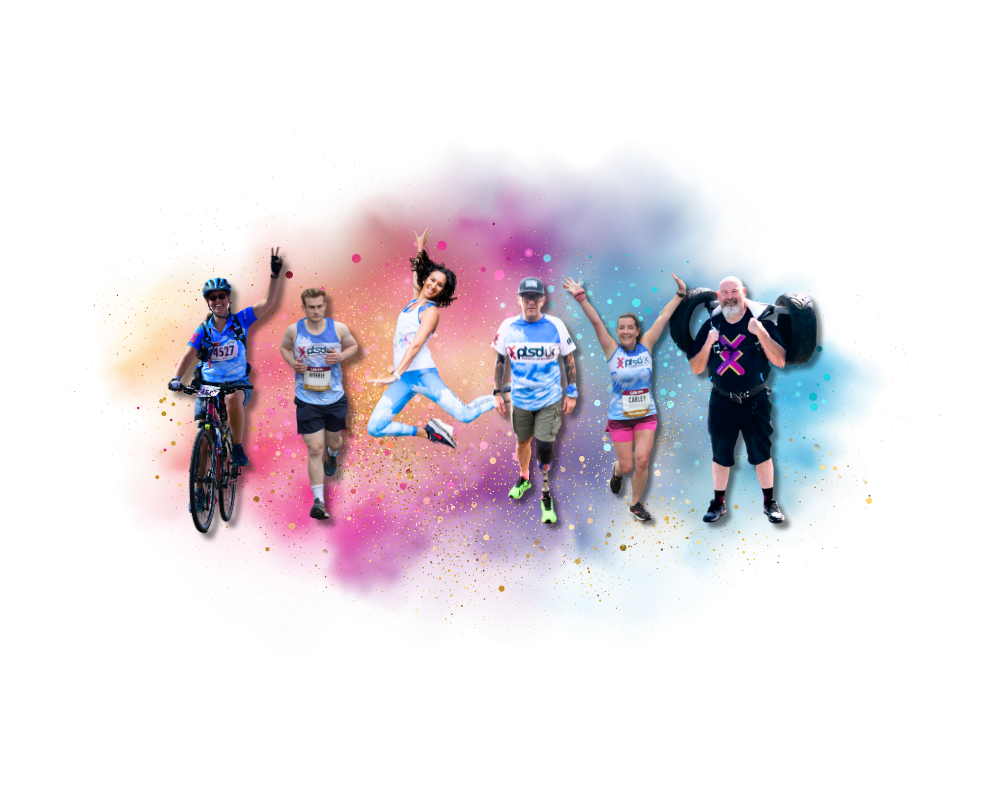
Whether you’re considering iconic events like the Great North Run, exhilarating experiences like skydiving, our unique PTSD UK events such as the Wagathon or Dip a Day December, or planning your own fundraiser, every penny you raise really can change the lives of people affected by PTSD & C-PTSD.

I want to get involved!


People in PTSD UK tshirts

Newsletter sign up to go here

Menu
Search
Basket

No products in the basket.