Post Traumatic Stress Disorder can change the way you see the world and other people. However, it can also create substantial damage in how you see yourself, including causing feelings of shame, self-anger and guilt.

You can shut off external things that distress you, but living with ‘yourself’ with self-compassion and understanding why your body and mind behave the way they do is vital, as it can help regulate mood and lead to feelings of safety, self-acceptance, and comfort.

One of the ways to do this is by engaging with a professional who uses compassion-focused therapy. Or, exploring the ways to train your mind to be more compassionate, and self-managing some of the self-deprecation that can come from trauma.

This article explains what is meant by compassion-focused therapy and how it can be used to address PTSD and C-PTSD issues such as anger management and self-loathing.

What is compassion focused therapy used for?

Compassion focused therapy is usually an aspect of Cognitive Behavioural Therapy (CBT). It is used to address a diverse range of issues, including grief, PTSD, OCD and perfectionism.

This video below by Russell Kolts – a licensed clinical psychologist and Professor of Psychology – provides an explanation of how compassion can be used as a therapeutic tool to address anger issues.

Compassion Focused Therapy has also been used successfully to help people with PTSD to address feelings of shame, guilt and lack of self-belief.

“There is a growing body of evidence within the healthcare community that suggests that developing feelings of compassion for self and others can have a profound impact on physiology, mental health and well-being.”

The success of this is very hard to measure, though various studies have shown improvement not just in mental health, but also in such factors as immune response, blood pressure, and cortisone release.

Compassion is clearly good for you!

The background to compassion-focused therapy

Compassion focused therapy (CFT) was developed by British clinical psychologist Professor Paul Gilbert OBE. He is the founder of the Compassionate Mind Foundation charity.

The core principle of CFT is that it is human nature to care. The Foundation defines compassion as: “a sensitivity to suffering in self and others with a commitment to try to alleviate and prevent it”.

The basis of using this as a PTSD and C-PTSD recovery tool is to focus on fundamental aspects of human nature. We are genetically built with systems that regulate our emotions and actions, which help us to ‘alleviate and prevent’ mental physical and emotional suffering in ourselves and other people.

This particularly involves three emotional regulation systems that impact our decision-making and thinking. Which are:

• Threat protection (fight, flight, fawn, freeze and flop)
• Drive (resource-seeking)
• Caring/soothing.

For some individuals – particularly people with PTSD and C-PTSD – there is an imbalance in these systems.

As an example, PTSD from a childhood trauma may cause you to have an overdeveloped threat system. So, you are quickly stimulated to anxiety and anger, or to seek to fight or run away. CFT would focus on that and help you to lean more on your drive (to find positive solutions) and your self-soothing techniques. Especially your ability to find strength, warmth, kindness, and moral courage.

The way compassion focused therapy is delivered

Treatment using CFT usually involves: learning about human nature, learning skills to develop your own self care-giving, and practising compassion in the way that you perceive other people.

The therapist would guide you towards understanding suffering. Then finding and validating your positive attributes and strengths. They may also use related techniques such as Imagery Rescripting to help you view situations and people in a more positive way, and manage your emotional responses

You may be encouraged to carry out tasks associated with this therapy option, such as letter writing, creating positive mental images or finding examples of compassionate behaviour.

The ultimate aim is to help you to let go of negative emotions and become more understanding and accepting of yourself and other people. So, you replace such emotional responses as anger, shame and self-criticism, with a greater awareness of how to self-soothe – this can then let you feel ‘worthy’ of progressing to treatments such as EMDR, which many avoid as they don’t feel they are ‘fixable’ or feel too guilty to engage with treatment.

Compassion focused therapy can be delivered to an individual or group, or you can learn Compassionate Mind Training to self-regulate and manage your own symptoms. It is sometimes also connected to mindfulness, and staying in the moment, using positive affirmations.

Is it worth trying compassionate focused therapy?

We all know that different therapies and activities work for different people with PTSD and C-PTSD. You can even find an individual’s needs and preferences change over time!

Progress is rarely in a straight line, or and can be difficult to measure.

However, learning to be more understanding and accepting of yourself, can be a key part of the process. It is one of a number of ways to balance your emotional reactions and move towards feeling more resilient.

When exploring your recovery options for PTSD or C-PTSD, it’s essential to find an approach that addresses both the symptoms you’re experiencing and the underlying trauma that caused them. The most effective treatments work not just to manage distress in the moment, but to help your brain process what happened and reduce long-term impact.

In the UK, the NICE guidelines (updated in 2018) recommend a number of trauma-focused psychological therapies for adults with PTSD and C-PTSD. These include Eye Movement Desensitisation and Reprocessing (EMDR), Trauma-focused Cognitive Behavioural Therapy (CBT), Narrative Exposure Therapy (NET) and Prolonged Exposure Therapy (PE). These therapies are backed by extensive research and are considered first-line treatments for PTSD and C-PTSD.

It’s important to remember that recovery isn’t one-size-fits-all. While these approaches have helped many people, everyone’s healing journey is unique. Some people may also find additional support through other therapies, self-help tools, or lifestyle changes.

Please note: nothing here is intended as a medical recommendation. Instead, it’s a guide to help you understand what’s available. Always work with a qualified professional to explore the best treatment options for you.

Social MEDIA SHARE THIS PAGE

  • Compassion-Focused Therapy

  • Frostadottir A.D., Dorjee D. (2019) Effects of Mindfulness Based Cognitive Therapy (MBCT) and Compassion Focused Therapy (CFT) on Symptom Change, Mindfulness, Self-Compassion, and Rumination in Clients With Depression, Anxiety, and Stress. Frontiers in Psychology. 2019 May 17;10:1099. doi: 10.3389/fpsyg.2019.01099
  • Gilbert, Paul (2009) Introducing compassion-focused therapy. Advances in Psychiatric Treatment;15(3):199-208. doi: 10.1192/apt.bp.107.005264

Join us in supporting the journey toward healing and recovery for everyone with PTSD & C-PTSD

Help us provide vital support, information, and resources across the UK

Printed Support Items

Our Supporters store offers a variety of merchandise to help raise awareness, along with practical items to support your treatment and recovery like our Ink and Insight Toolkit, Emotional Wheel Postcards, PTSD & C-PTSD Symptom Tracker sheets, Safety Plan worksheets and Communication Cards.

Find out more


Printed support items offered by PTSD UK

Insights: The PTSD UK Blog

Your Source for the Latest Support and Advice

Sign up to be a 'Friend of PTSD UK' today!

Unlock exclusive resources, discounts and events: just £5 per month

PTSD UK Impact Report 2025

Our Impact Report shines a light on the real-world difference PTSD UK is making for people affected by PTSD and C-PTSD across the country. Whether it’s helping someone access life-changing therapy, offering trusted information at a critical moment, or raising awareness that leads to understanding — your support is at the heart of it all.

If you’d like to see exactly how we’re turning compassion into action, and hope into healing, take a look at our latest Impact Report.

Read the PTSD UK Impact Report

PTSD UK Impact Report

Supportive Tools

Find grounding exercises, therapy resources and more

STANDARD PAGE TEMPLATE

Workbooks & Downloads

Download transformative workbooks for PTSD healing

STANDARD PAGE TEMPLATE

Books and Videos

Valuable knowledge & support for your healing journey

STANDARD PAGE TEMPLATE

Practical Tools & Guidance

Resources & downloads for practical and tangible support

STANDARD PAGE TEMPLATE

Raising Funds, Changing Lives

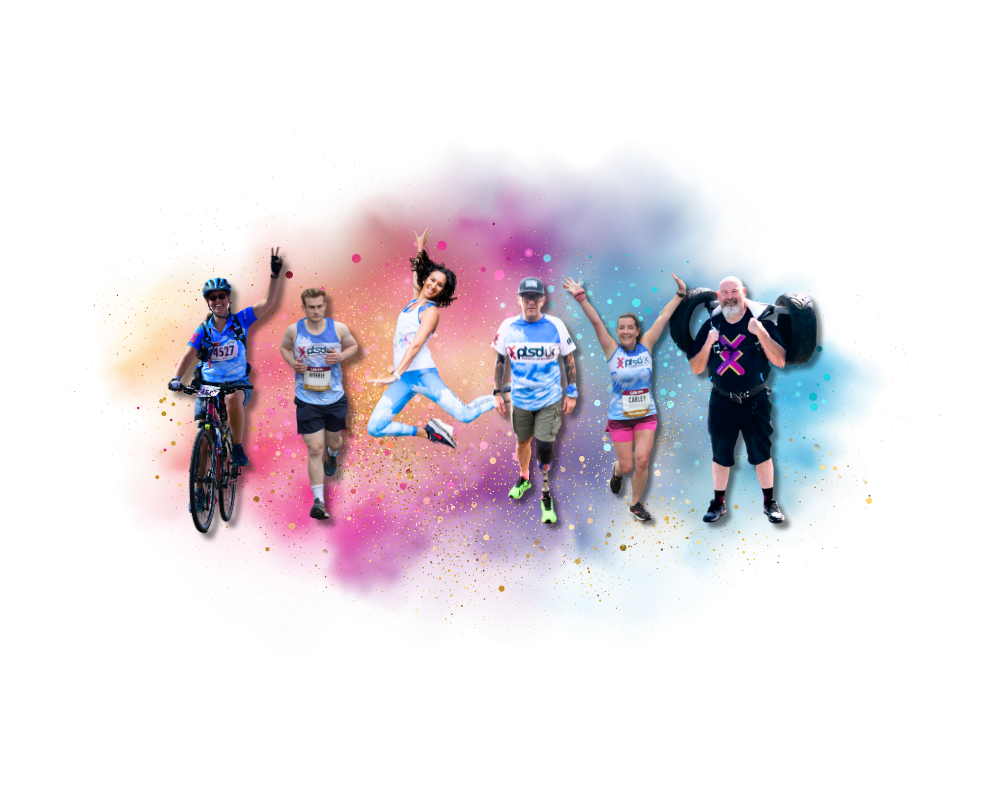
Whether you’re considering iconic events like the Great North Run, exhilarating experiences like skydiving, our unique PTSD UK events such as the Wagathon or Dip a Day December, or planning your own fundraiser, every penny you raise really can change the lives of people affected by PTSD & C-PTSD.

I want to get involved!


People in PTSD UK tshirts

Newsletter sign up to go here

Menu
Search
Basket

No products in the basket.