Talking therapies have been increasingly used in recent years, as people explore the best ways to tackle depression and anxiety. According to NHS figures, 1.6m people were referred for talking therapy in 2018-19, a significant increase over the previous year. Thanks to modern technology, access to this type of intervention continued during the pandemic.

It’s not surprising that people with PTSD have been part of this growing trend. Talking therapies have proved to be effective not just with issues associated with PTSD – such as depression and other symptoms. They are also a way of building more self-awareness and self-management techniques. For many people, talking therapies allow them to get into a ‘better place’ to allow them to make sense of their trauma and their PTSD to allow them to begin treatments such as EMDR.

There are various types of counselling and talking therapies offered to people with a diagnosis of PTSD. You may also see them referred to as psychological treatments or psychotherapies. However, don’t be too tied up in the jargon. The best therapy for PTSD often involves drawing on a mixture of the following, to find the best way forward for you.

Cognitive Behaviour Therapy

This is one of the most common ways to support an individual with PTSD. So, what is CBT?

The word cognitive means the way our brain processes information from all of our senses, and from our stored memory. It is how you think, make decisions, and react.

Cognitive Behaviour Therapy explores your decisions and responses and helps you to find ways to redirect or rebuild unhealthy ones. This creates positive behaviours (or actions). A CBT trained therapist can guide you towards creating your own practical solutions. This can make it easier to manage PTSD in your daily life.

CBT is an evidence-based therapy. Meaning it’s backed by scientific research into its effectiveness.

The Mental Health Foundation website quotes someone who used CTB: “I had a CBT therapist but I think she probably used lots of different things – in fact, it didn’t feel like she was ‘using’ anything – it felt like a natural process rather than anything very medical or clinical.”

This sort of first-hand account will hopefully reassure people with PTSD that talking therapies such as CBT are not always intense or uncomfortable.

Dialectic behaviour therapy (DBT)

Again, don’t get too hung up on the jargon!

What this refers to is a combination of CBT with guided meditation. From this, you can reach a better understanding of your thought processes, but also gain skills to create calmness and control while exploring your responses.

Meditation is a valuable and often misunderstood option for PTSD support.

Psychodynamic or Psychoanalysis therapy

That title probably sounds even more off-putting! However, it’s used to denote a talking therapy that focuses on your current mental health status, but also your ‘lived experience’. The therapist supports you in discussing your early years and any dreams you have, for instance, and the ways your personality influences your present feelings and behaviour.

The aim of this – as with other talking therapies – is to give you more insight and ability to deal with difficult situations and responses. It is important to find a psychoanalyst trained in PTSD if you’re going to cover the trauma you suffered.

Holistic or Humanistic Therapy

This sounds rather ‘new age’ and alternative. In fact, it refers to counselling that uses a range of techniques to deal with the whole of you – past, present and life goals. It focuses not just on you and your lived experience, but also on your relationships with other people.

The aim of humanistic therapy is to find your strengths and build your potential to move forwards, getting passed barriers. So, it’s sometimes used when your diagnosis is specific like depression or substance misuse caused by PTSD.

This person-centred counselling is also often used for mild depression, as it addresses the issue in the context of everything going on it your life.

Ways talking therapies are delivered

Just as there are several proven methods to provide counselling for people with PTSD, there are various options to access this help. Clearly, many prefer the privacy and safety of one-to-one support.

However, group therapy sessions can also be beneficial. Being around others who share similar challenges can be a comfortable (and comforting) way to engage with talking therapy.

It’s also possible to book PTSD counselling and talking therapies with your partner, or as a family group. This helps you to explore the way your condition affects your relationships and gives your loved one opportunities to be part of your progression to healthier decisions and reactions.

Finding the right PTSD therapy

Before jumping into talk therapy, it’s worth being aware that both it, and counselling, may cause an initial ‘re-traumatisation’, as you work through your trauma story over and over again. With some methods, this is how you process and ultimately manage your trauma, but it can be a difficult and upsetting process. People with PTSD need a reactive and versatile programme of support. So, it’s important to find a trained therapist who can be flexible and who also understands the complexities of post-traumatic stress disorder.

As with any mental health condition, PTSD can be a complicated condition to manage. It can be both life-altering and devastating, not only for the individual experiencing it, but also for their friends, family, and loved ones. And yet, despite the difficulties posed by the condition, PTSD is treatable. In order to give yourself the best possible system to get your illness under control, it’s best to take a two-pronged approach that addresses both sides of your brain.

The left side of the brain does all the thinking for you. That’s where your logic lies. Meanwhile, the right side of the brain handles imagery, creativity, and functions more on instinct and emotion than logic and reason.

Choosing a recovery path that helps you heal the disruption to your thought patterns and behaviour by working on both the logical and the instinctual is the most effective means of treating PTSD. Talk therapy and counselling are both options that provide a strong foundation that will enable you to process and express thoughts and feelings. Despite the huge benefits of both talk therapy and counselling, these alone are not enough to effectively treat PTSD. NICE guidance updated in 2018 recommends the use of trauma focused psychological treatments for Post Traumatic Stress Disorder in adults, specifically the use of Eye Movement Desensitisation Reprocessing (EMDR) and trauma focused cognitive behavioural therapy (CBT).

What if you don’t start to feel better?

If you’ve tried talking therapies and counselling to treat your PTSD, but have not found anything helpful, it’s important to tell your therapist or doctor that you were expecting to feel different. You may need more treatment, or you might need a different type of treatment. A follow-up course of therapy or alternative treatment should be suggested to ensure you continue to receive support in your recovery.

When exploring your recovery options for PTSD or C-PTSD, it’s essential to find an approach that addresses both the symptoms you’re experiencing and the underlying trauma that caused them. The most effective treatments work not just to manage distress in the moment, but to help your brain process what happened and reduce long-term impact.

In the UK, the NICE guidelines (updated in 2018) recommend a number of trauma-focused psychological therapies for adults with PTSD and C-PTSD. These include Eye Movement Desensitisation and Reprocessing (EMDR), Trauma-focused Cognitive Behavioural Therapy (CBT), Narrative Exposure Therapy (NET) and Prolonged Exposure Therapy (PE). These therapies are backed by extensive research and are considered first-line treatments for PTSD and C-PTSD.

It’s important to remember that recovery isn’t one-size-fits-all. While these approaches have helped many people, everyone’s healing journey is unique. Some people may also find additional support through other therapies, self-help tools, or lifestyle changes.

Please note: nothing here is intended as a medical recommendation. Instead, it’s a guide to help you understand what’s available. Always work with a qualified professional to explore the best treatment options for you.

Social MEDIA SHARE THIS PAGE

Join us in supporting the journey toward healing and recovery for everyone with PTSD & C-PTSD

Help us provide vital support, information, and resources across the UK

Printed Support Items

Our Supporters store offers a variety of merchandise to help raise awareness, along with practical items to support your treatment and recovery like our Ink and Insight Toolkit, Emotional Wheel Postcards, PTSD & C-PTSD Symptom Tracker sheets, Safety Plan worksheets and Communication Cards.

Find out more


Printed support items offered by PTSD UK

Insights: The PTSD UK Blog

Your Source for the Latest Support and Advice

Sign up to be a 'Friend of PTSD UK' today!

Unlock exclusive resources, discounts and events: just £5 per month

PTSD UK Impact Report 2025

Our Impact Report shines a light on the real-world difference PTSD UK is making for people affected by PTSD and C-PTSD across the country. Whether it’s helping someone access life-changing therapy, offering trusted information at a critical moment, or raising awareness that leads to understanding — your support is at the heart of it all.

If you’d like to see exactly how we’re turning compassion into action, and hope into healing, take a look at our latest Impact Report.

Read the PTSD UK Impact Report

PTSD UK Impact Report

Supportive Tools

Find grounding exercises, therapy resources and more

STANDARD PAGE TEMPLATE

Workbooks & Downloads

Download transformative workbooks for PTSD healing

STANDARD PAGE TEMPLATE

Books and Videos

Valuable knowledge & support for your healing journey

STANDARD PAGE TEMPLATE

Practical Tools & Guidance

Resources & downloads for practical and tangible support

STANDARD PAGE TEMPLATE

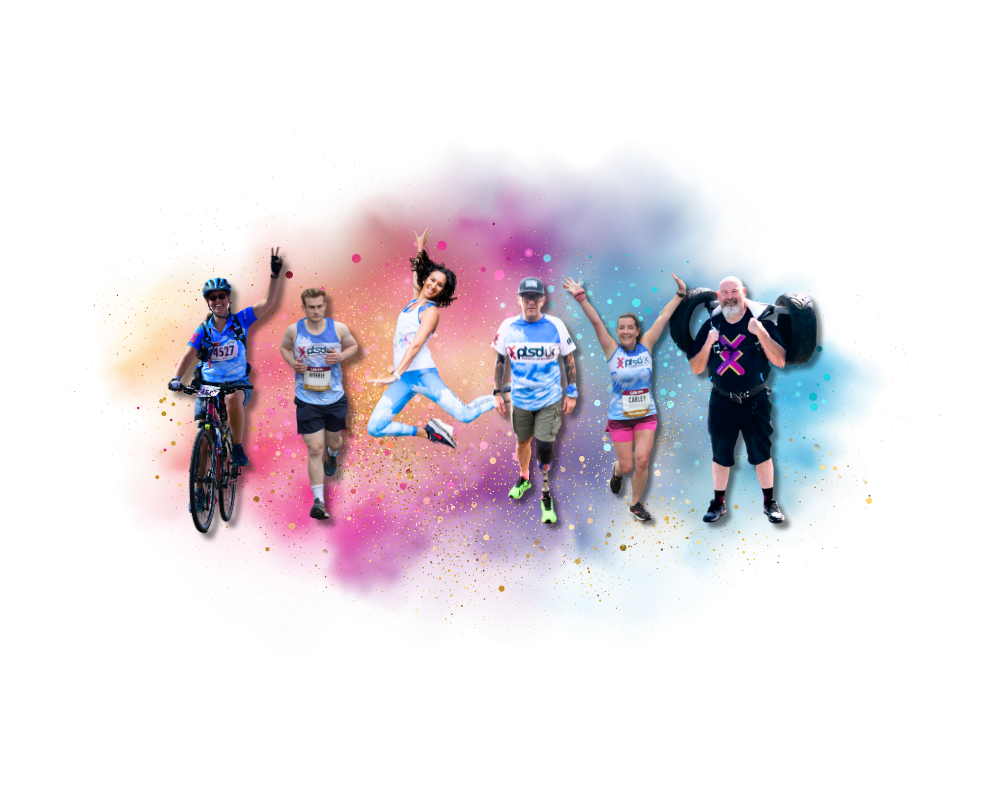
Raising Funds, Changing Lives

Whether you’re considering iconic events like the Great North Run, exhilarating experiences like skydiving, our unique PTSD UK events such as the Wagathon or Dip a Day December, or planning your own fundraiser, every penny you raise really can change the lives of people affected by PTSD & C-PTSD.

I want to get involved!


People in PTSD UK tshirts

Newsletter sign up to go here

Menu
Search
Basket

No products in the basket.