“Exposure to traumatic experiences has always been a part of the human condition. Attacks by saber tooth tigers or twenty-first century terrorists have likely led to similar psychological responses in survivors of such violence.” – Matthew J. Friedman, MD, PhD, Senior Advisor and former Executive Director, National Center for PTSD
Post Traumatic Stress Disorder is as ancient as humankind and can occur in all people, of any ethnicity, nationality, gender, occupation or culture, and at any age. The term ‘Post Traumatic Stress Disorder’ was actually only introduced in the 1980s even though it’s a condition that has been around for thousands of years.
PTSD: As ancient as humankind
An early example from literature illustrating the impact of trauma is found in the Epic of Gilgamesh, dating back to 2100 BC. The central character, Gilgamesh, grapples with the traumatic death of his dearest friend, Enkidu. This ancient narrative depicts Gilgamesh’s struggle with persistent and distressing memories, as well as recurring nightmares stemming from the traumatic event.
The first official documented case of ‘psychological distress’ was reported in 1900 BC, by an Egyptian physician who described a ‘hysterical reaction’ to trauma. Soldiers in Mesopotamia (present day Iraq) during the Assyrian dynasty (1300–609 BC) grappled with haunting post-combat disorders. Flashbacks, nightmares, depression, slurred speech, and concentration difficulties were prevalent. These ancient accounts were inscribed on cuneiform tablets. The Mesopotamians attributed the disorder to spirit affliction, believing that the spirits of enemies killed in battle were the root cause of these symptoms.
‘Chronic mental symptoms caused by sudden fright’ were also reported in 440 B.C. from the battle of Marathon, by Herodotus, the Greek historian, who recounted the story of Epizelus, an Athenian soldier. Witnessing his comrade fall in combat, Epizelus was struck with sudden blindness, a condition induced by fright rather than a physical injury. This blindness, brought on by fright and not a physical wound, persisted over many years.
Additionally, research by Hippocrates (460-377 BC) described that ‘stress reactions’ such as ‘frightening battle dreams’ often result from trauma. Research by Sigmund Freud’s pupil, Kardiner, also described what later became recognised as PTSD symptoms.
PTSD symptoms have long been noted in classical literature, such Mercutio’s account of Queen Mab in Shakespeare’s Romeo and Juliet which highlights frightening dreams in which they experience past battles. In a poignant monologue from Shakespeare’s Henry IV, Part 1, Lady Percy vividly articulates her husband’s struggles with sleeplessness and the inability to find joy in life after engaging in battle. Additionally, authors like Homer (The Iliad) and Charles Dickens (A Tale of Two Cities) depicted traumatic events and their aftermath in their works.
Furthermore, in Deuteronomy 20:1-9 it was noted that ‘military leaders have long been aware that many soldiers must be removed from the frontline because of nervous breakdown’:
“When thou goest out to battle against thine enemies, and seest horses, and chariots, and a people more than thou… the officers shall say, What man is there that is fearful and fainthearted? Let him go and return unto his house, lest his brethren’s heart faint as well as his heart” – Deuteronomy 20:1-9
The connection with PTSD and the military
Much of the current misunderstandings around PTSD are due to the various names it’s previous been given: ‘vent du boulet’ syndrome from the French Revolutionary and Napoleonic wars, ‘shell shock’ and ‘soldier’s heart’ during WWI, ‘war neurosis’ during WWII; and ‘combat stress reaction’ or ‘post-Vietnam syndrome’ during and after the Vietnam War.
In the late 1600s, Dr. Johannes Hofer, a Swiss physician, introduced the term “nostalgia” to characterize the condition afflicting Swiss soldiers. This phenomenon encompassed feelings of despair, homesickness, and exhibited classic PTSD symptoms, including sleeplessness and anxiety. Concurrently, doctors in German, French, and Spanish military contexts documented similar illnesses in their respective patients.
In 1761, Austrian physician Josef Leopold Auenbrugger discussed the impact of trauma on soldiers in his book “Inventum Novum,” with “nostalgia” in soldiers. These soldiers, as described, exhibited symptoms such as listlessness and withdrawal, proving resistant to efforts aimed at alleviating their lethargy.
Army medics in the French Revolution (1792-1800) and the Napoleonic wars (1800-1815) ventured into new hypotheses. Their observations revealed that soldiers, despite remaining physically unharmed, succumbed to ‘prolonged stupor’ when shells grazed past them. This phenomenon gave rise to the “vent du boulet” syndrome, capturing the profound impact of the mere wind generated by the passage of a cannonball, inducing fear and distress among individuals. The haunting echoes of incoming shells were depicted in Goethe’s memoirs of the cannonade at the Battle of Valmy in 1792: “The sound is quite strange, as if it were made up of the spinning of a top, the boiling of water, and the whistling of a bird.” Within the same narrative, Goethe delves into the unsettling experiences of derealisation and depersonalisation induced by the harrowing atmosphere of warfare.
“I could soon realize that something unusual was happening in me … as if you were in a very hot place, and at the same time impregnated with that heat until you blended completely with the element surrounding you. Your eyes can still see with the same acuity and sharpness, but it is as if the world had put on a reddish-brown hue that makes the objects and the situation still more scary … I had the impression that everything was being consumed by this fire … this situation is one of the most unpleasant that you can experience” – Johann Wolfgang von Goethe (1749-1832)
‘Nostalgia‘, initially observed across Europe, extended to the U.S. during the Civil War (1861–1865), becoming a prevalent medical diagnosis within military camps. However, certain military doctors considered it a sign of weakness, afflicting those deemed to possess a “feeble will.” In some cases, public ridicule was suggested as a remedy for nostalgia.
It was during this tine that an alternative view of symptoms proposed a physical injury as the root of the symptoms. “Soldier’s heart” or “irritable heart” was characterised by a rapid pulse, anxiety, and breathing difficulties. U.S. doctor Jacob Mendez Da Costa examined Civil War soldiers with these “cardiac” symptoms, terming it overstimulation of the heart’s nervous system or “Da Costa’s Syndrome.” Soldiers frequently returned to combat after receiving medication to manage these symptoms.
Research continued through World War I when certain present-day PTSD symptoms were identified as “shell shock,” attributed to reactions to the detonation of artillery shells. These symptoms included panic and sleep disturbances, among others. Initially, shell shock was believed to result from hidden brain damage caused by the impact of heavy artillery. Perspectives shifted as similar symptoms were observed in more soldiers who had not been in close proximity to explosions.
“The big artillery battles of December 1914… filled our hospitals with a large number of unscathed soldiers and officers presenting with mental disturbances. From then on, that number grew at a constantly increasing rate. At first, these soldiers were hospitalised with the others … but soon we had to open special psychiatric hospitals for them. Now, psychiatric patients make up by far the largest category in our armed forces …The main causes are the fright and anxiety brought about by the explosion of enemy shells and mines, and seeing maimed or dead comrades …The resulting symptoms are states of sudden muteness, deafness … general tremor, inability to stand or walk, episodes of loss of consciousness, and convulsions” – Robert Gaupp, German psychiatrist, 1917
Approximately 80,000 cases of shell shock were reported in the British army by the war’s end. Many soldiers, having only a brief respite, returned to the war zone. For those receiving extended treatment, interventions such as hydrotherapy or electrotherapy were occasionally employed.
By World War II, psychiatrists began acknowledging the mental health repercussions of combat, concluding that too many individuals prone to anxiety or “neurotic tendencies” had been selected in the previous war. Despite more rigorous screening and rejection of candidates before World War II, military service still had a profound impact. Approximately twice as many American soldiers exhibited symptoms of PTSD during World War II compared to World War I.
During World War II, the term “shell shock” gave way to a new diagnosis known as Combat Stress Reaction (CSR), often referred to as “battle fatigue,” ‘combat exhaustion‘ or ‘war neurosis‘. The latter diagnosis corresponded to the ‘névrose de guerre’ and ‘Kriegsneurose‘ found in French and German scientific literature.
Military authorities believed that removing men from combat or administering drugs like sodium amytal would alleviate this distress. However, these measures proved ineffective. During World War II, US estimates show almost 1.4 million out of the 16.1 million men who served were treated for combat fatigue, constituting 40 percent of all discharges..
‘Railway Spine’
The dawning of the Industrial Revolution (1760) and the development of steam-driven machinery were the causes of some of the first civilian man-made disasters and proved to be a catalyst for the first cases of PTSD outside the battlefield. Survivors of railway disasters puzzled doctors at the time – the display of psychological symptoms could not be explained, so it led them to assume there were microscopic lesions in the brain or spine of the survivor, and so they were diagnosed with ‘railway brain’ and ‘railway spine’. Notably, Charles Dickens was involved in a rail accident in 1865 and wrote about his symptoms of sleeplessness and anxiety as a result of the trauma in a letter discovered in 201
“The scene was so affecting when I helped in getting out the wounded and dead, that for a little while afterwards I felt shaken by the remembrance of it. But I had no personal injury whatsoever. My watch (which is curious) was more sensitive, physically, than I; for it was some few minutes ‘slow’ for some few weeks afterwards. Except that I cannot yet travel on a railway, at great speed, without having a disagreeable impression – against all reason – that the carriage is turning on one side, I have not the least inconvenience left. No imagination can conceive the ruin of the carriages, or the extraordinary weights under which the people were lying, or the complications into which they were twisted up among iron and wood, and mud and water. But in writing these scanty words of recollection, I feel the shake and am obliged to stop.” – Charles Dickens
The term “traumatic neurosis” made its initial appearance in 1884 when German physician Hermann Oppenheim used it as the title for his book, detailing 42 cases stemming from railway or workplace accidents. However, this diagnosis faced staunch criticism from Charcot, who argued that these cases were merely variations of hysteria, neurasthenia, or hystero-neurasthenia.
In 1798 psychiatrist Pinel wrote in”Nosographie Philosophique” the case of the philosopher Pascal, who nearly drowned in the Seine when his carriage horses bolted. In the subsequent eight years of his life, Pascal grappled with recurring dreams of a precipice on his left side, placing a chair there in the fear of falling off his bed. This ordeal marked a shift in his personality, rendering him more apprehensive, scrupulous, withdrawn, and depressive
The controversies of diagnosis
So why then, with all this evidence of PTSD and trauma reaction as far back as history goes, has the condition only be discussed and become a diagnosable condition in recent years?
Emil Kraepelin (1856-1926), a highly influential psychiatrist of his era, documented his encounters with ‘war neuroses’ during World War I in his posthumously published autobiography in German in 1983.
“[As early as 1917], the question of war neuroses was raised. We alienists all agreed that we should try to limit an excessively liberal granting of compensations which might lead to a sharp rise in the number of cases and claims … the fact that all kinds of more or less severe psychiatric symptoms could lead to a lengthy stay in a hospital, or even to a discharge from the military with a generous disability pension, had disastrous consequences. This was compounded by the population’s feeling of pity for the seemingly severely ill “war-shakers” [Kriegszilterer], who drew attention to themselves on street corners and used to be generously rewarded. In such circumstances, the number of those who believed that a “nervous shock,” or, especially, having been buried alive, entitled them to discharge and continuous support, increased dramatically.” – Emil Kraepelin (1856-1926)
Kraepelin’s remarks encapsulate the debates of the era, questioning whether these mental symptoms were merely acts of malingering, aimed at avoiding frontline duties. Shockingly, around 346 British and Commonwealth soldiers were executed on military command, a number that included individuals with acute stress disorder exhibiting dazed or confused behaviour, accused of desertion or cowardice.
The instances of war neurosis witnessed in WWI posed a significant challenge to psychoanalytical theories. It became apparent that attributing all cases to childhood traumas was untenable, leading to the acknowledgment that recent traumas could indeed give rise to psychological symptoms.
A diagnosable condition
In 1952, the American Psychiatric Association (APA) introduced the first Diagnostic and Statistical Manual of Mental Disorders (DSM-I), which featured the category of “gross stress reaction.” This classification aimed to address individuals who were generally functioning well but displayed symptoms stemming from traumatic experiences such as disasters or combat. However, the diagnosis assumed that reactions to trauma would subside relatively quickly. If symptoms persisted beyond six months, another diagnosis was required.
Despite mounting evidence linking trauma exposure to psychological issues, this diagnosis was omitted in the second edition of DSM (1968). DSM-II included “adjustment reaction to adult life,” which proved insufficient in capturing a condition akin to PTSD. This diagnosis was restricted to three specific instances of trauma: unwanted pregnancy with suicidal thoughts, fear associated with military combat, and Ganser syndrome (characterised by providing incorrect answers to questions) in prisoners facing a death sentence.
“Post-Vietnam syndrome,” was a term coined in 1972 by psychiatrist Chaim Shatan. As Vietnam veterans returned home, they grappled with emotional numbness, volatility, flashbacks, and rage. Due to delayed symptoms, accessing treatment and benefits for these invisible wounds proved challenging for many veterans. Veterans, facing challenges in traditional avenues, embraced “street corner psychiatry”—self-help communities that blended healing with anti-war protests. Along the way, they met clinicians and researchers like Robert Lifton and Chaim Shatan, prompting advocacy for the DSM to incorporate a post-combat stress diagnosis.
During this era, other social movements turned their attention to studying the psychological impact on various groups, including Holocaust survivors, Vietnam veterans, and victims of domestic abuse. In 1974, psychologists Ann Wolbert Burgess and sociologist Lynda Lytle Holmstrom coined the term “Rape Trauma Syndrome” to delineate a form of PTSD experienced by women who had endured the traumatic ordeal of sexual assault, characterised by three distinct stress response phases.
These groundbreaking studies played a crucial role in shedding light on the profound effects of trauma. As a result, this research, coupled with societal awareness, paved the way for a more comprehensive understanding, eventually leading to the formal recognition and description of PTSD in 1980.
In this first version of DSM-III, a traumatic event was defined as ‘an overwhelming stressor beyond the scope of typical human experiences’. The originators of the initial PTSD diagnosis had specific events in mind, such as war, torture, rape, the Nazi Holocaust, atomic bombings, natural disasters (like earthquakes and hurricanes), and human-made disasters (including factory explosions, airplane crashes, and car accidents).
They distinguished traumatic events from the challenging stressors that are part of everyday life, such as divorce, failure, rejection, serious illness, and financial setbacks. According to DSM-III, adverse psychological reactions to these “ordinary stressors” would be classified as Adjustment Disorders, not PTSD. This separation between traumatic and other stressors rested on the belief that while most individuals can manage everyday stress, their adaptive capabilities are likely to be overpowered in the face of a traumatic stressor.
During the 1990s, a wave of innovative treatments emerged to address PTSD. Notably, techniques such as Eye-Movement Desensitisation and Reprocessing (EMDR), advancements in medication, and novel therapeutic approaches have evolved significantly over the past two to three decades. These developments represent ongoing efforts to enhance the efficacy of interventions for people dealing with PTSD.
The most recent update to the DSM-5 (2013), has introduced evidence-based revisions to PTSD diagnostic criteria, bringing significant conceptual and clinical changes. Unlike the previous understanding of PTSD as primarily a fear-based anxiety disorder, DSM-5 recognises an expanded range of presentations. The emphasis now includes anhedonic (inability to feel pleasure) and dysphoric (sense of unease) aspects, featuring negative cognitions and mood states, along with disruptive behaviours such as anger, impulsivity, recklessness, and self-destructiveness. Additionally, PTSD is no longer categorised as an Anxiety Disorder; it has found its place in a new classification called Trauma- and Stressor-Related Disorders. This category encompasses disorders where exposure to a traumatic or adverse environmental event precedes the onset of each disorder.
Twelve years later, it was also adopted in the World Health Organisation’s International Classification of Diseases.
Where are we now?
In today’s understanding, PTSD and C-PTSD extends beyond combat, affecting survivors of various traumas like sexual abuse, health crises, natural disasters, and more. Symptoms range from flashbacks and nightmares to hypervigilance, concentration issues, amnesia, dissociation, and negative beliefs. Researchers continually develop new treatments, unraveling how trauma impacts the brain and body. They also explore the potential intergenerational transmission of trauma through DNA-related chemical changes.
Not everyone who experiences trauma will develop PTSD, and those with the disorder can find healing and joy. Similar to other chronic conditions, PTSD can go into remission. As researchers delve deeper into PTSD, they recognise the brain’s resilient efforts to heal itself after traumatic events, offering hope for recovery and renewed well-being.
“It’s such a destructive idea to think that PTSD is dysfunction. We’re getting it fundamentally wrong when we think it’s a sign of brokenness. It’s the sign of the impulse to survive.” – Mary Catherine McDonald, Old Dominion University.
Social MEDIA SHARE THIS PAGE
- History of PTSD in Veterans: Civil War to DSM-5
- Crocq MA, Crocq L. From shell shock and war neurosis to posttraumatic stress disorder: a history of psychotraumatology. Dialogues Clin Neurosci. 2000 Mar;2(1):47-55. doi: 10.31887/DCNS.2000.2.1/macrocq. PMID: 22033462; PMCID: PMC3181586. Accessed 10/11/23
- PTSD History and Overview
- HISTORY OF PTSD
- PTSD and Shell Shock
- Abdul-Hamid, W. K., & Hughes, J. H. (2014). Nothing New under the Sun: Post-Traumatic Stress Disorders in the Ancient World. Early Science and Medicine, 19(6), 549–557. http://www.jstor.org/stable/24269382 Accessed on 11/11/2023
Info goes here
Join us in supporting the journey toward healing and recovery for everyone with PTSD & C-PTSD
Help us provide vital support, information, and resources across the UK
Printed Support Items
Our Supporters store offers a variety of merchandise to help raise awareness, along with practical items to support your treatment and recovery like our Ink and Insight Toolkit, Emotional Wheel Postcards, PTSD & C-PTSD Symptom Tracker sheets, Safety Plan worksheets and Communication Cards.

PTSD UK Supporters’ Store
Every item in our Supporters’ Store helps fund vital work for people affected by PTSD and C-PTSD.
Whether you’re buying for yourself or a loved one, every purchase supports awareness, recovery resources, and access to life-changing information. From empowering T-shirts, beanie hats and wristbands to practical support tools, everything has been created with care — and with hope in mind.

Insights: The PTSD UK Blog
Your Source for the Latest Support and Advice

AAA STANDARD BLOG POST
Lorem ipsum dolor sit amet, consectetur adipiscing elit. Donec tortor tortor, facilisis eu imperdiet sit amet, semper eget urna. Quisque sit amet erat risus. Pellentesque habitant morbi tristique senectus et netus et malesuada fames ac turpis egestas.
Read article
Why does Post Traumatic Stress Disorder make you so tired?
Lorem ipsum dolor sit amet, consectetur adipiscing elit. Donec tortor tortor, facilisis eu imperdiet sit amet, semper eget urna. Quisque sit amet erat risus. Pellentesque habitant morbi tristique senectus et netus et malesuada fames ac turpis egestas.
Read article
Hello world!
Lorem ipsum dolor sit amet, consectetur adipiscing elit. Donec tortor tortor, facilisis eu imperdiet sit amet, semper eget urna. Quisque sit amet erat risus. Pellentesque habitant morbi tristique senectus et netus et malesuada fames ac turpis egestas.
Read article
Hello world!
Lorem ipsum dolor sit amet, consectetur adipiscing elit. Donec tortor tortor, facilisis eu imperdiet sit amet, semper eget urna. Quisque sit amet erat risus. Pellentesque habitant morbi tristique senectus et netus et malesuada fames ac turpis egestas.
Read article
Hello world!
Lorem ipsum dolor sit amet, consectetur adipiscing elit. Donec tortor tortor, facilisis eu imperdiet sit amet, semper eget urna. Quisque sit amet erat risus. Pellentesque habitant morbi tristique senectus et netus et malesuada fames ac turpis egestas.
Read articleSign up to be a 'Friend of PTSD UK' today!
Unlock exclusive resources, discounts and events: just £5 per month
PTSD UK Impact Report 2025
Our Impact Report shines a light on the real-world difference PTSD UK is making for people affected by PTSD and C-PTSD across the country. Whether it’s helping someone access life-changing therapy, offering trusted information at a critical moment, or raising awareness that leads to understanding — your support is at the heart of it all.
If you’d like to see exactly how we’re turning compassion into action, and hope into healing, take a look at our latest Impact Report.

Practical Tools & Guidance
Resources & downloads for practical and tangible support
STANDARD PAGE TEMPLATERaising Funds, Changing Lives
Whether you’re considering iconic events like the Great North Run, exhilarating experiences like skydiving, our unique PTSD UK events such as the Wagathon or Dip a Day December, or planning your own fundraiser, every penny you raise really can change the lives of people affected by PTSD & C-PTSD.
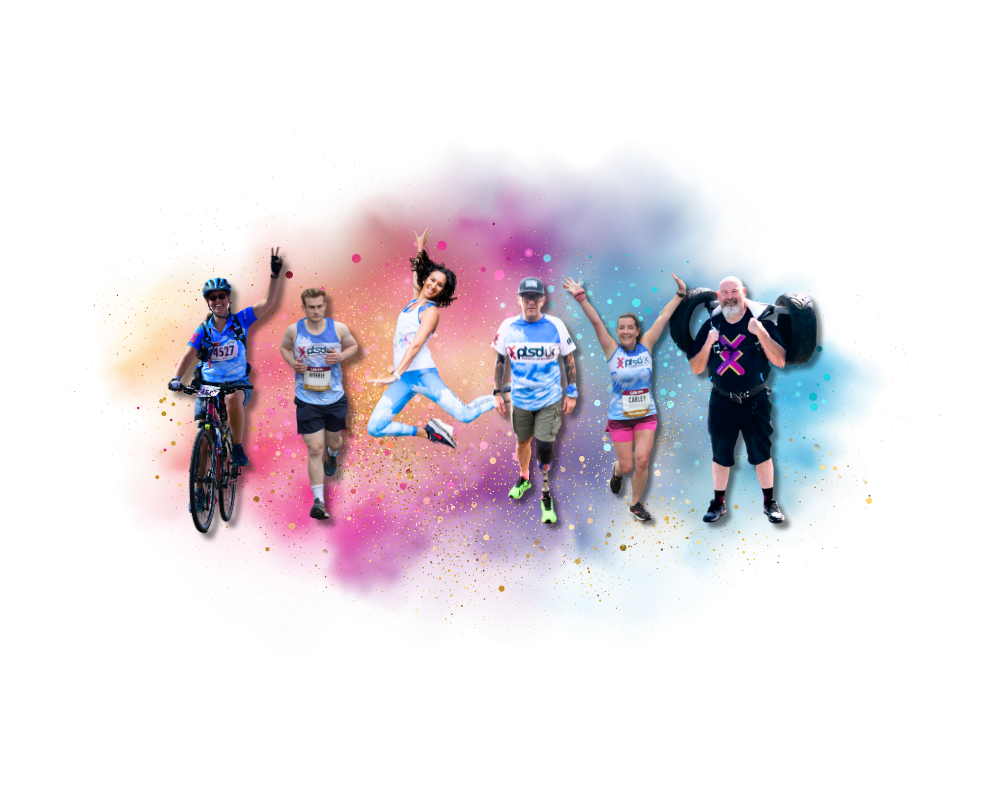
Create Your Own Fundraiser: Make a Difference Your Way
Whether it’s hosting a band night, swimming lengths for sponsorship, taking your dog on a fundraising walk, a sponsored leg wax or head shave, or hiking up Ben Nevis – the choice is yours! Every fundraiser helps us reach more people affected by PTSD & C-PTSD to help change lives.
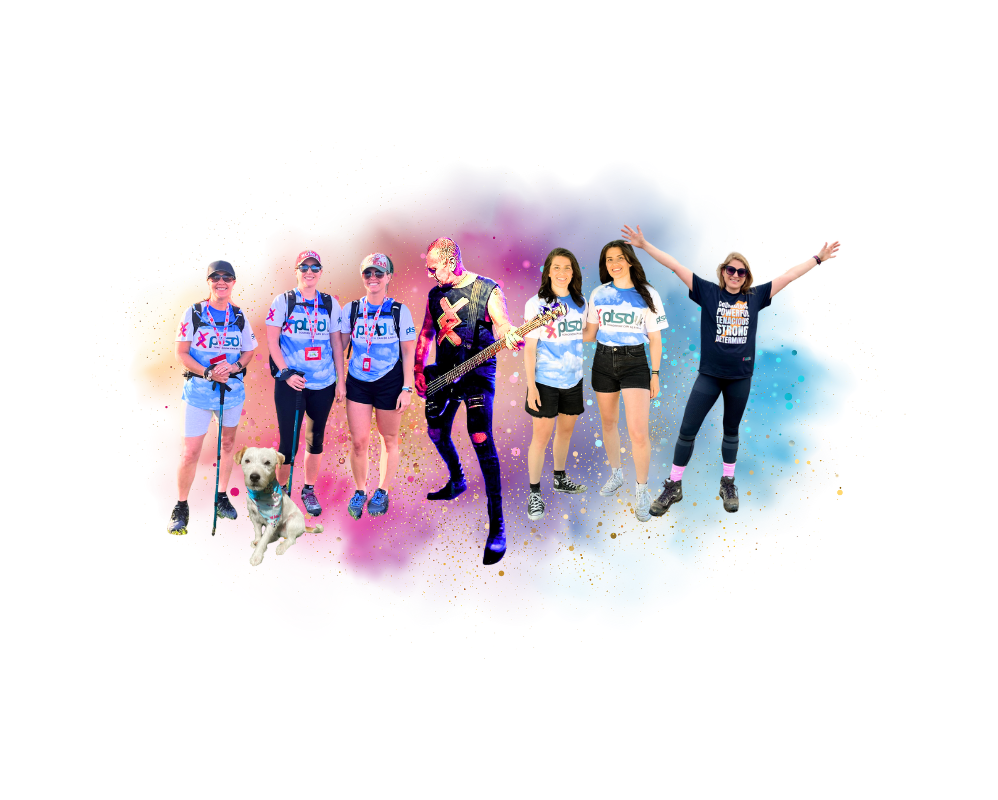

Find us on Facebook
Join us on Facebook for the latest news, updates, personal stories, helpful articles, and community support. It’s a great place to stay connected and see how your support is making a difference.
Join the Conversation
Find us on Instagram
Follow us on Instagram for powerful quotes, uplifting messages, behind-the-scenes updates, and visual resources designed to support and inspire anyone affected by PTSD or C-PTSD.
Find Daily Inspiration
Find us on TikTok
Catch us on TikTok for quick, engaging videos that raise awareness, share real experiences, and highlight the small steps that can lead to big changes in PTSD and C-PTSD recovery.
Watch & LearnNewsletter sign up to go here