Living with Post Traumatic Stress Disorder (PTSD) or Complex PTSD (C-PTSD) can feel like carrying a weight that nobody else can see. One of the most common—and often misunderstood—symptoms is deep, persistent exhaustion. Not just feeling ‘a bit tired’, but a level of fatigue that can interfere with even the simplest of daily tasks.
If you’re feeling drained all the time, you’re not alone. Many people who reach out to PTSD UK for PTSD support or C-PTSD support describe a profound tiredness that doesn’t go away with sleep. This article explores why that is, and offers reassurance and guidance if you’re navigating this part of your trauma recovery journey.
The hidden toll of trauma on your body
Trauma doesn’t just affect your thoughts or emotions—it can have a powerful impact on your physical health too. When your brain constantly feels under threat (even if you’re no longer in danger), your body remains on high alert. This ongoing stress response uses up enormous amounts of energy, often leaving you feeling wiped out.
Research suggests the human brain can generate around 50% more stress than the body can actually manage. When this stress isn’t released or resolved—something that’s common for people with PTSD and C-PTSD—it creates a biological overload. One of the most common results? Exhaustion.
The role of cortisol: the stress hormone
During traumatic events, your brain releases cortisol, a hormone designed to help you survive. It gives you a short burst of energy, helps numb pain, and sharpens your focus. It’s part of your body’s natural fight-or-flight response.
But when that response is stuck in the ‘on’ position—something many people with PTSD or C-PTSD experience—your cortisol levels remain high for long periods. Over time, this can lead to:
-
Chronic fatigue
-
Disrupted sleep patterns
-
Memory issues
-
Mood changes
-
Depleted serotonin, the brain’s natural mood stabiliser
So if you find yourself struggling to concentrate or needing rest far more often than before, it’s not laziness—it’s your brain and body responding to chronic stress.
Hypervigilance and disrupted sleep
People living with PTSD or C-PTSD are often hypervigilant—always on edge, always scanning for potential danger. While this was once a survival mechanism, it can make true rest nearly impossible.
Hypervigilance doesn’t disappear at bedtime. Even when you do manage to fall asleep, you may wake up multiple times throughout the night, experience nightmares, or sleep very lightly. This broken sleep leaves you physically and mentally exhausted the next day, no matter how many hours you were in bed.
The impact on your adrenal system
Your adrenal glands are responsible for producing stress hormones like cortisol and adrenaline. When they’re constantly activated, it can result in something often referred to as adrenal fatigue—though this isn’t an official medical diagnosis, it’s a term many people use to describe:
-
Feeling tired no matter how much you sleep
-
Trouble getting out of bed
-
Cravings for salty or sweet foods
-
Brain fog or trouble focusing
When your adrenal system is overwhelmed, your body is essentially running on empty.
People with PTSD or C-PTSD may also experience hypersomnia, which means sleeping excessively or feeling overwhelmingly sleepy during the day—even after a full night’s rest.
A 2017 case study published in Sleep Science and Practice highlighted this experience in detail. The doctor described five people living with PTSD who regularly slept for 12–16 hours a night, often followed by daytime naps of 2–3 hours. Despite this, they still reported feeling exhausted, showing that trauma-related fatigue isn’t simply solved by more sleep.
Mental fatigue: the hidden drain
Fatigue isn’t always just about physical tiredness. PTSD and C-PTSD often involve intrusive thoughts, emotional flashbacks, and ongoing anxiety—all of which use up enormous mental energy.
It takes constant effort to manage your emotions, stay grounded, and carry on with day-to-day life. Over time, this emotional and cognitive load can feel like a second full-time job, and it’s no wonder so many people feel utterly worn out.
It’s not just tiredness. It’s trauma.
What you’re experiencing is not laziness or weakness—it’s a common, biological, and emotional reaction to trauma. As Dr Bessel van der Kolk describes in The Body Keeps the Score, trauma quite literally reshapes how your body and brain function. Fatigue is one of the body’s ways of saying: I need to rest and repair.
Similarly, in Complex PTSD: From Surviving to Thriving, Pete Walker emphasises that rest is essential for people recovering from trauma. It’s not indulgent. It’s necessary.
What can help?
While there’s no instant cure for PTSD-related fatigue, there are steps you can take to support your recovery:
-
Talk to a trauma-informed therapist: They can help you understand your symptoms and find coping tools that work for you.
-
Learn about your Window of Tolerance: Recognising when you’re in, above, or below your optimal arousal zone can help you manage your energy more effectively.
-
Prioritise rest without guilt: Your body needs time to heal—mentally and physically.
-
Explore calming practices: Mindfulness, grounding techniques, and gentle movement can help your nervous system begin to reset.
-
Seek community: Connecting with others who understand can ease the loneliness of trauma recovery. Join our community.
You’re not alone—and it does get better
At PTSD UK, we believe that understanding your symptoms is a powerful part of the healing process. Fatigue is a valid and very real part of PTSD and C-PTSD. With time, self-compassion, and the right support, it is possible to regain energy and stability. Recovery is not about pushing through exhaustion—it’s about learning how to rest, regulate, and reconnect.
Whether you’re looking for more information or simply reassurance that what you’re feeling is valid, we’re here to help.
___________
** PLEASE NOTE: We’re an Amazon Affiliate which means if you click on the books listed above and purchase through Amazon, we will get a percentage of the value of the book from them. This doesn’t cost you any extra, but allows us to claim money from Amazon on your purchase. If you’d prefer to shop in Independent, local bookstores, you can still do so online and support PTSD UK via BookShop.org where we get 10% commission on each book sale)**
________
- Royal College of Psychiatrists – PTSD
- NICE Guidelines – Post-traumatic Stress Disorder
- Healthline
- Gupta MA. Recurrent Hypersomnia and Autonomic Dysregulation in Posttraumatic Stress Disorder. J Clin Sleep Med. 2017 Dec 15;13(12):1491. doi: 10.5664/jcsm.6860. PMID: 29117891; PMCID: PMC5695999.
- The Body Keeps the Score – Dr. Bessel van der Kolk (Penguin UK)
An essential book explaining how trauma reshapes the brain and body, including fatigue. - Complex PTSD: From Surviving to Thriving – Pete Walker (Amazon UK)
Accessible, empowering guidance for those living with C-PTSD.
** PLEASE NOTE: We’re an Amazon Affiliate which means if you click on the books listed above and purchase through Amazon, we will get a percentage of the value of the book from them. This doesn’t cost you any extra, but allows us to claim money from Amazon on your purchase. If you’d prefer to shop in Independent, local bookstores, you can still do so online and support PTSD UK via BookShop.org where we get 10% commission on each book sale)**
Image from Flickr user Daniel Guimarães
Join us in supporting the journey toward healing and recovery for everyone with PTSD & C-PTSD
Help us provide vital support, information, and resources across the UK

AAA STANDARD BLOG POST
Lorem ipsum dolor sit amet, consectetur adipiscing elit. Donec tortor tortor, facilisis eu imperdiet sit amet, semper eget urna. Quisque sit amet erat risus. Pellentesque habitant morbi tristique senectus et netus et malesuada fames ac turpis egestas.
Read article
Why does Post Traumatic Stress Disorder make you so tired?
Lorem ipsum dolor sit amet, consectetur adipiscing elit. Donec tortor tortor, facilisis eu imperdiet sit amet, semper eget urna. Quisque sit amet erat risus. Pellentesque habitant morbi tristique senectus et netus et malesuada fames ac turpis egestas.
Read article
Hello world!
Lorem ipsum dolor sit amet, consectetur adipiscing elit. Donec tortor tortor, facilisis eu imperdiet sit amet, semper eget urna. Quisque sit amet erat risus. Pellentesque habitant morbi tristique senectus et netus et malesuada fames ac turpis egestas.
Read article
Hello world!
Lorem ipsum dolor sit amet, consectetur adipiscing elit. Donec tortor tortor, facilisis eu imperdiet sit amet, semper eget urna. Quisque sit amet erat risus. Pellentesque habitant morbi tristique senectus et netus et malesuada fames ac turpis egestas.
Read article
Hello world!
Lorem ipsum dolor sit amet, consectetur adipiscing elit. Donec tortor tortor, facilisis eu imperdiet sit amet, semper eget urna. Quisque sit amet erat risus. Pellentesque habitant morbi tristique senectus et netus et malesuada fames ac turpis egestas.
Read articlePTSD UK Supporters’ Store
Every item in our Supporters’ Store helps fund vital work for people affected by PTSD and C-PTSD.
Whether you’re buying for yourself or a loved one, every purchase supports awareness, recovery resources, and access to life-changing information. From empowering T-shirts, beanie hats and wristbands to practical support tools, everything has been created with care — and with hope in mind.

Sign up to be a 'Friend of PTSD UK' today!
Unlock exclusive resources, discounts and events: just £5 per month
PTSD UK Mission and Vision
At PTSD UK, our mission is simple but powerful: provide supportive, reliable, high-quality and easy-to-understand resources to educate, help empower and inspire resilience in everyone affected by PTSD & C-PTSD, to help them work towards successful, sustained recovery. We campaign to raise awareness of the condition, reach out to high-risk communities, help shape UK healthcare policies, and give everyone the belief that ‘Tomorrow CAN be a new day’.
Together, we’re changing the conversation around trauma — and building a future filled with hope and healing.
Practical Tools & Guidance
Resources & downloads for practical and tangible support
STANDARD PAGE TEMPLATECreate Your Own Fundraiser: Make a Difference Your Way
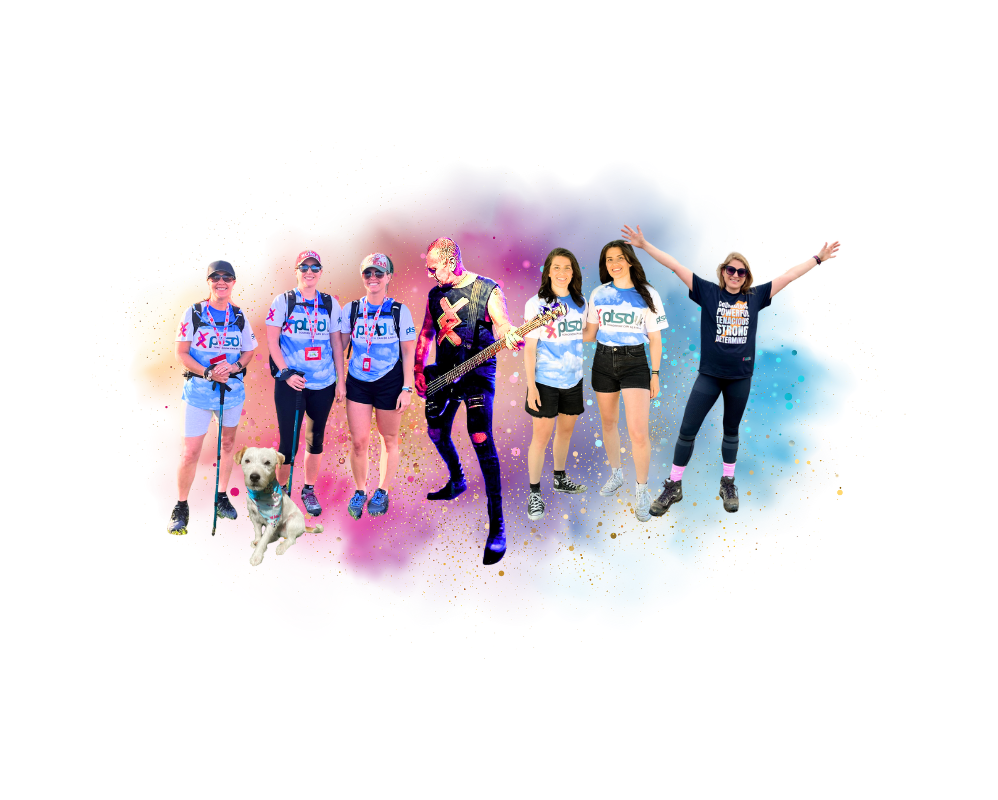
Whether it’s hosting a band night, swimming lengths for sponsorship, taking your dog on a fundraising walk, a sponsored leg wax or head shave, or hiking up Ben Nevis – the choice is yours! Every fundraiser helps us reach more people affected by PTSD & C-PTSD to help change lives.

Find us on Facebook
Join us on Facebook for the latest news, updates, personal stories, helpful articles, and community support. It’s a great place to stay connected and see how your support is making a difference.
Join the Conversation
Find us on Instagram
Follow us on Instagram for powerful quotes, uplifting messages, behind-the-scenes updates, and visual resources designed to support and inspire anyone affected by PTSD or C-PTSD.
Find Daily Inspiration
Find us on TikTok
Catch us on TikTok for quick, engaging videos that raise awareness, share real experiences, and highlight the small steps that can lead to big changes in PTSD and C-PTSD recovery.
Watch & Learn